What Causes Dark Grout in Orlando Homes?
A freshly mopped tile floor can still look dirty when the grout lines are dark. That is because mopping cleans the tile surface far more easily than the porous material between the tiles. If you are wondering what causes dark grout, the answer is usually a buildup of everyday soil, moisture, cleaning residue, and sometimes mold or mildew.
In Orlando homes, that problem can develop faster than many people expect. Humid bathrooms, wet pool traffic, busy kitchens, and open doors to a patio or lanai all give grout plenty to absorb. The good news is that dark grout is often restorable. The right fix depends on what is actually in the grout lines and whether the discoloration is sitting on the surface or has settled deep into the pores.
What Causes Dark Grout to Change Color?
Grout is naturally rougher and more absorbent than ceramic or porcelain tile. Unless it has been properly sealed and maintained, it works almost like a sponge. Tiny pits in the grout hold onto dirt, oils, minerals, and moisture that a mop cannot fully remove.
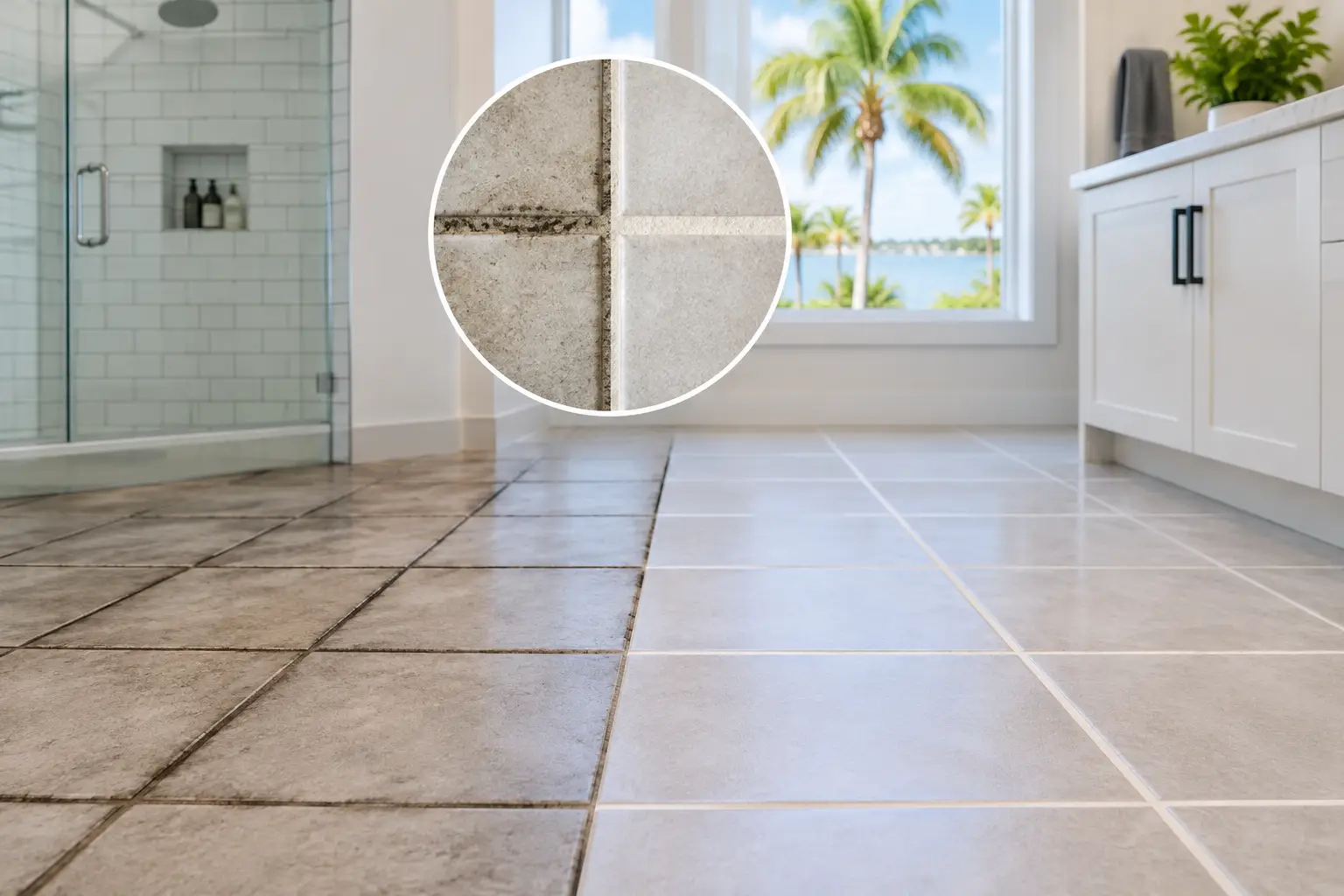
A dark appearance does not always mean the grout was originally white. Beige, gray, and tan grout can all become noticeably darker as buildup accumulates. In many cases, the original color is still underneath – it is just hidden by a layer of grime.
Ground-In Dirt From Foot Traffic
Kitchen floors, hallways, entryways, and laundry rooms collect soil from shoes, pet paws, and bare feet. In Central Florida, sand, fine outdoor grit, lawn debris, and residue from wet sidewalks can get tracked inside every day. Tile may wipe clean quickly, but the dirt settles into grout lines where it becomes embedded.
This type of dark grout often looks worse along walkways and in front of appliances. You may notice a lighter shade near walls or under a rug, where there has been less traffic. That contrast is a strong sign that soil buildup, rather than a permanent grout color change, is the main issue.
Soap Scum, Body Oils, and Product Residue
Bathroom and shower grout faces a different kind of buildup. Soap scum, shampoo, conditioner, body oils, shaving products, and hard-water minerals can form a sticky film. That film traps dust and turns grout gray, brown, or nearly black over time.
Bar soap can be especially troublesome because its ingredients react with minerals in water and leave a stubborn residue. Even some floor cleaners contribute to the problem when too much product is used or when the floor is not rinsed well. A cleaner that leaves behind a residue can make grout attract more dirt after each use.
Moisture, Mildew, and Mold
Dark grout in a shower, around a tub, or near a bathroom floor may be related to mildew or mold. Orlando’s warm, humid climate makes bathrooms slow to dry, especially in homes with limited ventilation or a frequently used shower. Moisture can sit in grout lines long after the tile surface feels dry.
Mildew usually appears as dark specks or a black, gray, or greenish film. Mold can look similar, so color alone is not enough to identify it. A musty odor, repeated return of spots after cleaning, or staining around failed caulk and leaking fixtures can point to an ongoing moisture problem.
Surface mildew may respond to careful cleaning and better ventilation. But if discoloration keeps coming back, the source of the moisture matters more than the cleaner. A leaking shower door, worn caulk, plumbing issue, or poor exhaust fan can keep feeding the problem.
Hard-Water Minerals and Iron Stains
Hard water is another reason bathroom and shower grout loses its original color. Mineral deposits can leave a chalky white, yellowish, tan, or gray film. When those minerals combine with soap scum and soil, the grout can look much darker and duller than it really is.
In some homes, iron in the water can leave orange-brown staining. This is common around faucets, shower edges, and areas where water repeatedly runs or pools. Hard-water staining needs a different approach than ordinary dirt, so harsh scrubbing without identifying the stain can waste time and wear down the grout.
Old Sealer or No Sealer at All
Grout sealer is not permanent. It gradually wears away under foot traffic, regular cleaning, moisture, and abrasive products. Once the sealer is gone, grout absorbs spills and grime more readily. If a floor was never sealed after installation, it may have been vulnerable from day one.
Old or uneven sealer can also create patchy discoloration. One section may look darker because it absorbed more soil, while another stays lighter because some protection remains. After deep cleaning, a quality sealer can help keep future staining from setting in as quickly.
Why Routine Mopping Often Does Not Fix Dark Grout
Mops are useful for removing loose dirt from tile, but they can push dirty water across the grout lines. If the water is not changed often, a mop may leave soil behind in the very places you want to brighten. Steam mops and spray mops can help with light maintenance, but they also have limits when the staining has been building for months or years.
Aggressive DIY methods carry risks. Abrasive powders, wire brushes, and repeated heavy scrubbing can erode grout and make it even more porous. Acidic cleaners may damage natural stone, etch certain tile finishes, weaken grout, or harm nearby metal fixtures. Bleach may lighten some surface stains, but it does not remove every type of buildup and can create strong fumes in a closed bathroom.
For a small, recent stain, a pH-neutral tile and grout cleaner, a nylon grout brush, and a thorough rinse are a sensible starting point. Work in a small area first. If the grout remains dark after drying, the problem is likely deeper than surface dirt.
How to Tell Whether Your Grout Needs Professional Cleaning
A professional cleaning is worth considering when grout lines are dark across a large area, when DIY products have not changed the color, or when the floor looks dirty again soon after mopping. It is also a practical choice before listing a home, after a tenant move-out, or before guests arrive at a vacation rental.
Professional tile and grout cleaning uses controlled agitation, specialized solutions, and high-pressure extraction to flush loosened soil out of the grout lines instead of spreading it around the floor. This can produce a major color improvement without the damage that comes from overly aggressive scrubbing. If staining is permanent, grout recoloring may be a better option than repeated cleaning attempts.
For showers, a technician can also help distinguish between cleanable surface buildup and conditions that need repair, such as cracked grout, failing caulk, or persistent moisture intrusion. Cleaning improves appearance, but it cannot solve a leak behind the wall.
Dream Clean Orlando helps homeowners, landlords, and businesses throughout the area restore dingy tile floors and shower grout with straightforward recommendations and honest pricing. The goal is not to sell a treatment every time. It is to identify what is darkening the grout and choose the safest practical way to improve it.
Keeping Grout From Turning Dark Again
Once grout is clean, prevention is much easier than restoration. Sweep or vacuum tiled floors before mopping so grit does not get dragged through the grout. Use a cleaner made for your tile type, follow the dilution instructions, and change mop water when it becomes cloudy.
In bathrooms, run the exhaust fan during showers and for at least 20 minutes afterward. Squeegee shower walls when possible, wipe standing water from corners, and repair failing caulk early. For high-traffic kitchens, entryways, and lanais, consider sealing clean grout so it has more resistance to spills and tracked-in dirt.
Dark grout is not always a sign of poor housekeeping. It is often the predictable result of porous material meeting Florida humidity, daily use, and cleaning methods that cannot reach below the surface. When the tile still has life but the grout makes the room feel worn out, restoring those lines can make the whole space look builder-new again.