Why Does Grout Turn Yellow? Causes and Fixes
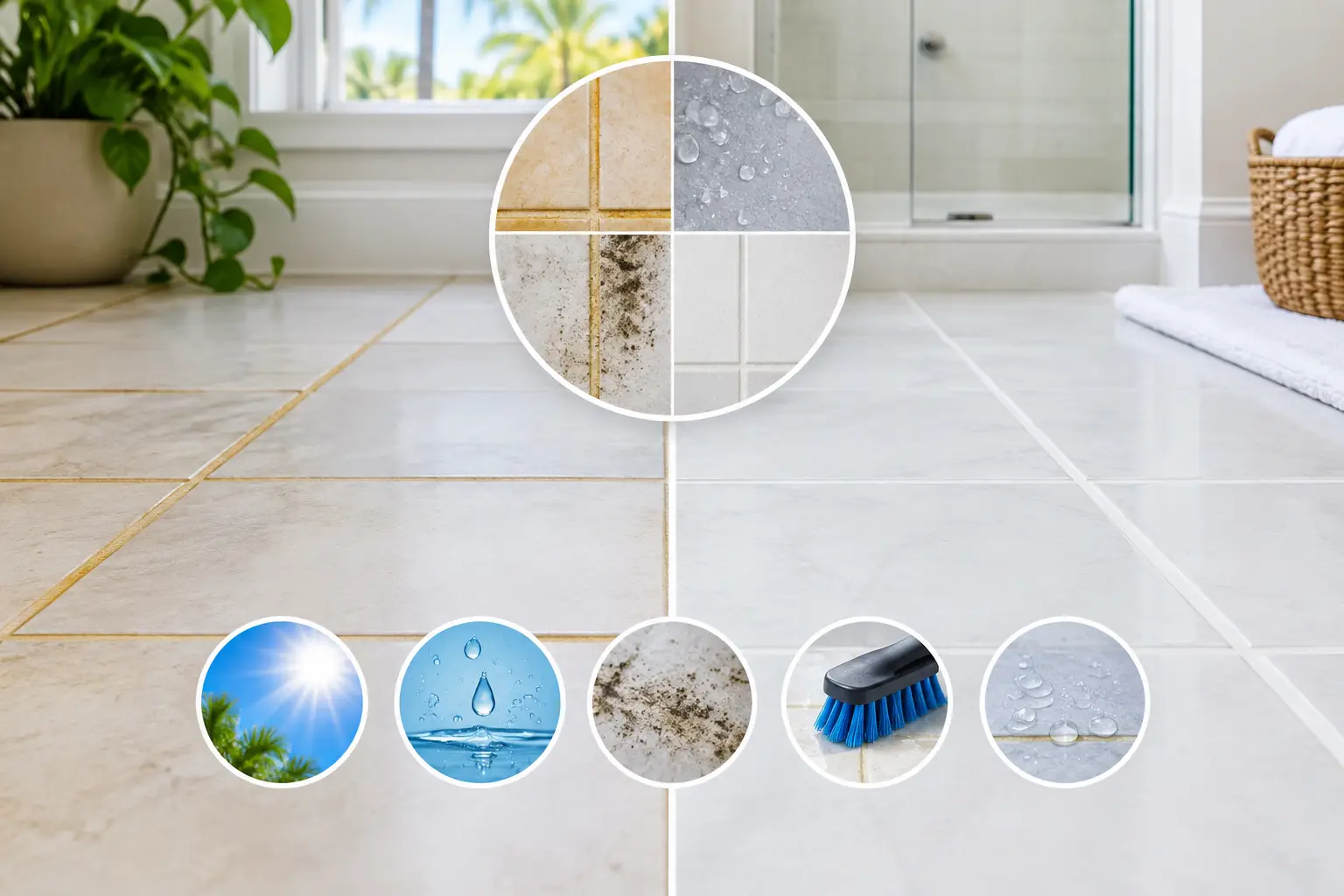
A white grout line can look clean one month and oddly yellow the next, especially around a shower, kitchen floor, or entryway. So, why does grout turn yellow? Usually, it is not one single problem. Grout is porous, and it absorbs residue, minerals, oils, moisture, and everyday soil that regular mopping may leave behind.
In Central Florida, humidity adds another layer to the problem. Bathrooms stay damp longer, lanai floors collect outdoor dirt, and hard-water deposits can build up faster than many homeowners expect. The good news is that yellow grout is often cleanable. The right solution depends on what caused the discoloration in the first place.
Why Does Grout Turn Yellow in Homes?
Grout is made to fill the space between tiles, not to repel everything that lands on it. Unless it is properly sealed and maintained, its tiny pores hold onto contaminants. Over time, those contaminants change the grout’s original color.
Soap residue and body oils in bathrooms
Yellowing around shower floors, tub surrounds, and bathroom tile is often caused by a mix of soap scum, shampoo residue, body oils, and moisture. Bar soaps can leave behind a waxy film that dulls tile and gives white grout a yellow or beige cast.
This buildup is particularly common in showers with limited ventilation. If the exhaust fan is not used long enough after bathing, moisture remains in the room and allows residue to cling to grout lines. The grout may also feel rough or look darker near corners, drains, and the bottom row of wall tile.
Hard water and mineral deposits
Orlando-area water can leave minerals behind after it dries. Calcium and other deposits often appear white and chalky at first, but they can trap soap residue and dirt, creating a yellowed look. Iron in water may also leave yellow, orange, or rust-colored staining in certain homes.
Hard-water staining is usually most noticeable near faucets, shower doors, toilet bases, and areas where water repeatedly runs across the same grout lines. A standard floor cleaner may make the surface smell fresh without removing the mineral layer underneath.
Kitchen grease and tracked-in soil
Kitchen grout has a different set of challenges. Cooking oils settle onto nearby floors, then mix with dust and foot traffic. This creates a sticky film that gradually turns light grout yellow, tan, or brown. Mopping can spread diluted grease across the floor if the mop water is not changed frequently.
Entryways, hallways, and tiled living areas can yellow for similar reasons. Shoes bring in pollen, lawn residue, fine sand, and outdoor soil. In Florida, that can be especially noticeable after rainy days, when damp dirt is more likely to settle into grout lines.
Old sealer or cleaning product buildup
Sometimes the grout itself is not dirty – the product sitting on top of it is the issue. Some sealers yellow as they age, particularly if they were applied heavily or were not designed for that tile and grout type. Wax-based floor products and certain shine-enhancing cleaners can also leave a yellow film.
This is why adding more sealer or stronger cleaner is not always the answer. If the discoloration is from an old coating, the coating may need to be removed before the grout can look like-new again.
Mildew, mold, and moisture-related staining
Mold is often black, gray, green, or brown, but moisture problems can contribute to yellowing too. A yellowish stain in a damp shower may be a combination of mildew, soap residue, and mineral deposits. If the area has a musty smell, returns quickly after cleaning, or appears around cracked grout or failing caulk, there may be an ongoing moisture issue to address.
Cleaning the surface helps appearance, but it will not fix a leaking pipe, a poorly ventilated bathroom, or water getting behind loose tile. Those issues need attention before fresh cleaning or sealing will last.
How to Tell What Is Causing Yellow Grout
Location gives you useful clues. Yellow grout in a shower is more likely related to soap, hard water, and moisture. Yellow grout beside a stove or in a kitchen walkway points more toward grease and traffic soil. Yellowing around a faucet or showerhead may indicate mineral buildup.
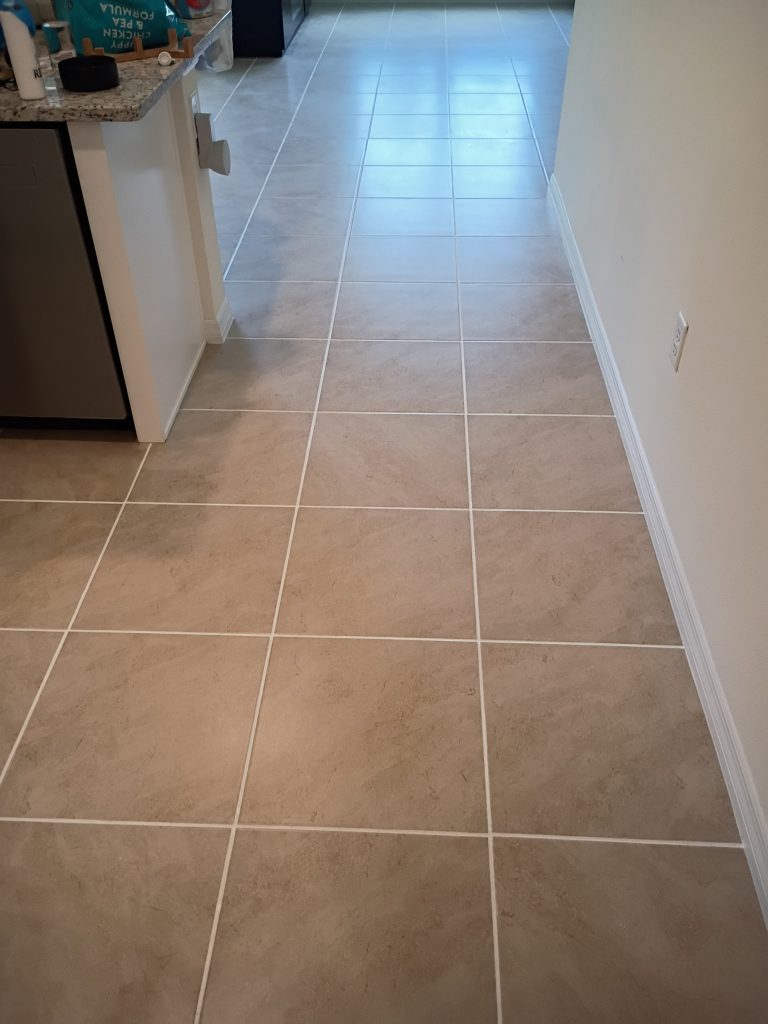
Also look at the pattern. A uniform yellow tint across an entire floor can suggest an aging sealer or product residue. Spotty stains may come from spills, pet accidents, rust, or localized water exposure. If the grout was recently installed and started yellowing soon after, ask whether a sealer, haze remover, or cleaning product was applied.
The tile material matters as well. Ceramic and porcelain tile can usually tolerate more cleaning options than natural stone. Marble, travertine, limestone, and other stone surfaces can be etched or dulled by acidic cleaners, even when the grout looks like the only problem.
Safe Ways to Clean Yellow Grout
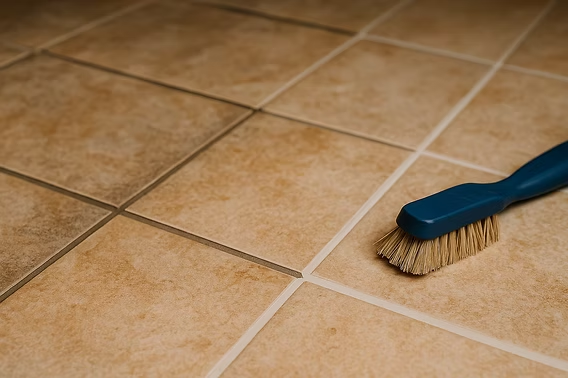
For mild yellowing, start gently. Sweep or vacuum loose grit first, then apply a pH-neutral tile and grout cleaner according to its directions. Give it time to work, scrub the grout with a nylon brush, and rinse thoroughly with clean water. Leaving cleaner behind can create a new residue problem.
For bathrooms, use a nonabrasive cleaner that is appropriate for your tile. Good ventilation matters just as much as the cleaner. Run the bathroom fan during showers and for at least 20 to 30 minutes afterward, and use a squeegee on shower walls when practical. Less standing moisture means less opportunity for soap film and mildew to build up.
Avoid reaching for harsh products right away. Chlorine bleach can lighten some stains, but it can also weaken grout over repeated use, create strong fumes, and fail to remove grease or mineral buildup. Never mix bleach with vinegar, ammonia, or other cleaners. Acidic products, including vinegar, may be risky on natural stone and can damage certain grout installations.
A steam mop can help with light surface soil, but it is not a cure for deep staining. If the grout lines remain yellow after a careful cleaning, the discoloration may be below the surface or trapped beneath an old coating.
When DIY Cleaning Is Not Enough
Deeply embedded soil, grease, hard-water deposits, and aged sealers often need more than a brush and household cleaner. Aggressive scrubbing may roughen grout, wear down its surface, or leave uneven color behind. This is especially true on older floors, textured tile, and shower grout that has been exposed to years of moisture.
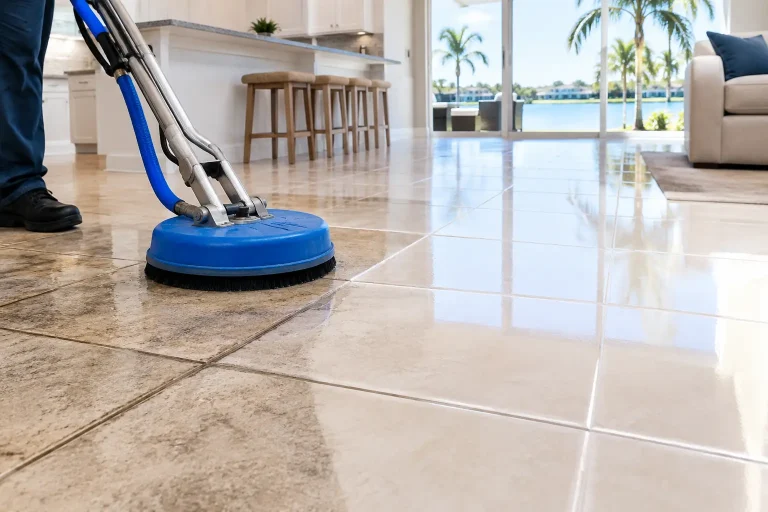
Professional tile and grout cleaning uses specialized agitation, controlled cleaning solutions, and high-pressure extraction to flush contaminants from grout lines rather than simply moving them around. For grout that is permanently stained or uneven in color, recoloring may be a better option than repeated harsh cleaning. A quality recoloring service can restore a consistent color and add protection to the grout at the same time.
For Orlando homeowners, landlords, and property managers preparing a home, turnover, or commercial space, this can make a noticeable difference. Clean grout makes tile look brighter and more cared for, often without the cost and disruption of replacement. Dream Clean Orlando can assess whether the issue is cleanable buildup, failing sealer, moisture staining, or grout that needs restoration rather than another round of DIY products.
Keep Grout From Turning Yellow Again
Once the grout is clean, maintenance is simpler than restoration. Use a pH-neutral cleaner instead of soap-heavy or shine-adding floor products. Rinse bathroom surfaces well, dry up standing water, and keep ventilation running after showers. In kitchens, clean grease splatters promptly rather than allowing them to settle into nearby grout.
Sealing clean, fully dry grout can reduce absorption and make routine cleanup easier. It is not a force field, though. Sealer wears over time, especially in busy kitchens, showers, entryways, and rental properties. A realistic maintenance plan, plus professional cleaning when buildup becomes embedded, will protect the appearance of your tile far better than waiting until the grout looks permanently stained.
Yellow grout is usually your floor or shower asking for more targeted care, not a sign that the tile has to be replaced. Address the cause, use products that fit the material, and give moisture-prone areas the attention they need. Your grout can look bright again – and stay that way longer.