Does Grout Sealing Prevent Mold in Bathrooms?
A shower can look clean after a quick scrub and still have a moisture problem hiding in the grout lines. In Central Florida, where humidity is part of everyday life, bathrooms can stay damp long after a shower ends. So, does grout sealing prevent mold? It can help reduce the conditions mold needs, but sealing is not a complete mold-prevention system on its own.
Grout sealer protects clean, sound grout from absorbing as much water, soap residue, body oils, and soil. That makes the surface easier to maintain and less likely to hold the moisture and organic buildup that encourage mold growth. But if a shower has poor ventilation, failing caulk, a leak, or dirty grout underneath the sealer, mold can still return.
Does Grout Sealing Prevent Mold Completely?
No. A quality grout sealer helps lower the risk, but it does not guarantee that mold will never appear. Mold needs moisture, time, and something to feed on. In a bathroom, that food source can be soap scum, shampoo residue, skin oils, dust, or residue left behind by harsh cleaners.
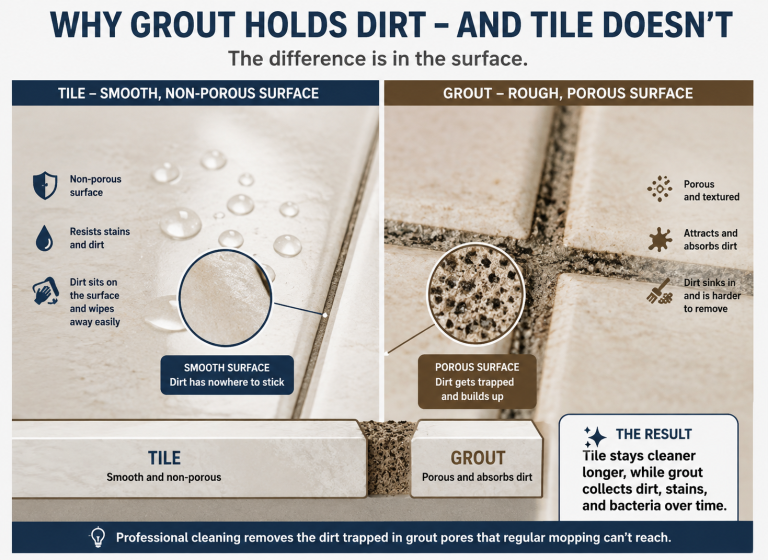
Most cement-based grout is porous. Think of it as a dense sponge with tiny openings. When water and residue settle into those openings, the grout can darken, stain, and stay damp longer than the tile around it. A penetrating sealer fills or lines those pores, helping water bead up at the surface instead of soaking in quickly.
That protection matters, especially in shower walls, shower floors, tub surrounds, and bathroom floors. Still, a sealer cannot fix water entering behind the tile, moisture trapped under damaged caulk, or a bathroom that never has a chance to dry out.
What Grout Sealer Actually Does
A professional-grade penetrating sealer is designed to protect grout without leaving a thick plastic-like coating on top. It reduces absorption while allowing the grout to breathe. When applied to properly cleaned and dried grout, it can help with several common problems:
- Slower absorption of water, spills, and soap residue
- Less staining from hard-water minerals, shampoo, and everyday bathroom products
- Easier routine cleaning because soil stays closer to the surface
- Better long-term appearance in high-moisture and high-traffic areas
Sealer works best as a protective layer, not as a cover-up. If grout is already blackened with mold, coated in mineral deposits, or stained by years of use, applying sealer first can trap contaminants and leave the bathroom looking uneven. The grout should be deep-cleaned, rinsed, and fully dried before sealing begins.
Why Mold Can Grow on Sealed Grout
The grout may be sealed, but a bathroom is made up of many other surfaces and moisture paths. Mold commonly starts in failing caulk joints, corners, along the shower pan, beneath bath mats, behind toilet tanks, or in areas where water splashes repeatedly. Mold can also grow on residue sitting on top of sealed grout rather than inside it.
A sealed shower still needs routine care. If soap film and body oils are left on the walls for weeks, they create a surface layer where mildew can develop. The sealer makes cleanup easier, but it does not replace cleaning.
Ventilation is equally important. Running the exhaust fan during a shower and for at least 20 to 30 minutes afterward helps remove humid air. Opening a door or window, when practical, also helps the room dry. If a fan is noisy, weak, or rarely used, sealed grout will have to work much harder than it should.
Watch for Leaks and Failed Caulk
If mold keeps returning to the same spot, do not assume the sealer failed. Check for cracked caulk, loose tiles, missing grout, plumbing leaks, or water pooling on the shower floor. Grout and tile are not waterproofing materials. Water can pass through damaged joints and create a larger issue behind the wall or beneath the floor.
Caulk should be used at changes of plane, such as where a shower wall meets another wall, the shower pan, tub, or countertop. Grout in those flexible joints can crack as the home shifts and materials expand or contract. Replacing failed caulk is often a more effective mold-control step than applying another coat of sealer.
Clean First, Then Seal
The order of work makes a real difference. Sealing dirty grout may make it look temporarily darker or shinier, but it does not remove embedded contamination. For best results, grout should be restored before protection is applied.
Professional tile and grout cleaning uses more than a mop and household spray. Embedded soil, soap residue, grease, hard-water buildup, and discoloration often sit deep in the grout lines. High-pressure extraction and controlled heat can flush out that buildup while removing the dirty water instead of spreading it across the floor.
Once the grout is clean and dry, the right sealer can be selected for the material and location. Ceramic or porcelain tile with cement grout may need a different approach than natural stone, travertine, textured tile, or a shower floor with heavy mineral buildup. Using the wrong product, or applying too much, can leave haze on tile or uneven protection in the grout.
For heavily stained grout that cannot be restored to an even color through cleaning alone, color sealing may be an option. A grout color seal refreshes the appearance of the lines while creating a more uniform protective finish. It can be a practical alternative to regrouting when the grout is still structurally sound but permanently discolored.
How to Keep Sealed Grout Mold-Resistant
After sealing, simple habits protect the work and make the bathroom easier to maintain. A quick squeegee on shower walls after use removes much of the water that would otherwise sit on tile and grout. Drying corners and ledges where water collects is especially useful.
Use a pH-neutral cleaner made for tile and grout as part of normal bathroom cleaning. Avoid relying on oily cleaners, waxy products, or harsh acids. They can leave residue, damage sensitive surfaces, and make the floor harder to clean over time. Bleach may lighten visible mold temporarily, but repeated heavy use is not a complete solution for a moisture issue and can be tough on surrounding materials.
Wash and dry bath mats regularly, particularly mats with rubber backing that hold moisture against the floor. Keep shampoo bottles and shower accessories from creating standing-water rings in corners. Most importantly, deal with cracks, soft grout, loose tile, and persistent dampness early.
How Often Should Grout Be Resealed?
There is no single schedule for every bathroom. A lightly used guest bath may hold protection longer than a busy family shower used several times each day. The type of grout, sealer, cleaning products, water exposure, and ventilation all affect how long the protection lasts.
A simple test is to place a few drops of water on clean grout. If the water beads and remains on top for a short time, the sealer may still be working. If it darkens the grout quickly or soaks in, the area may be ready for professional evaluation and resealing. Shower floors and areas around tubs often need attention sooner than dry bathroom walls.
When Professional Grout Service Makes Sense
If your tile still looks dull after mopping, grout lines stay dark, or mildew returns soon after cleaning, the problem may be deeper than surface dirt. Professional service is especially helpful for large tile areas, textured tile, natural stone, rental turnovers, commercial restrooms, and showers with years of mineral and soap buildup.
Dream Clean Orlando uses professional cleaning methods to remove embedded buildup before applying protective sealing where it is appropriate. The goal is not to promise an impossible mold-proof bathroom. It is to restore cleaner grout, improve protection, and give homeowners and property managers a surface that is easier to keep clean.
A sealed grout line is one useful layer of protection. Pair it with a working exhaust fan, regular light cleaning, dry shower surfaces, and prompt repairs, and your bathroom has a far better chance of staying fresh, clean, and comfortable.