Professional Cleaning Versus Replacement
A floor can look old long before it is actually worn out. In many Central Florida homes and businesses, dark grout, dull tile, shower buildup, and greasy kitchen floors create a frustrating question: professional cleaning versus replacement – which choice makes financial sense? The answer depends less on how dirty the surface looks and more on the condition beneath that dirt.
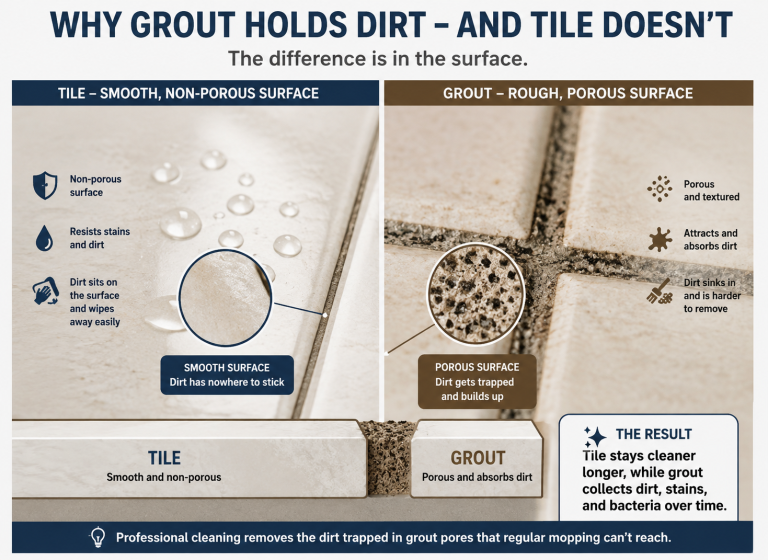
Routine mopping removes loose debris from the surface, but it does not pull embedded soil, soap residue, oils, hard-water minerals, and bacteria from porous grout lines. That is why a floor may still look gray or stained after regular cleaning. Before planning a costly renovation, it is worth finding out whether the tile and grout can be professionally restored.
When Professional Cleaning Is the Better Investment
Professional tile and grout cleaning is often the right first step when the tile is structurally sound and the main problem is discoloration. Ceramic, porcelain, travertine, natural stone, and textured tile can all collect grime in places household tools cannot reach. Grout is especially vulnerable because it is porous and sits below the tile surface, where dirty mop water and spills settle.
A professional process uses industrial-grade solutions, maximum heat, pressure, and extraction to loosen and flush out buildup. Truck-mounted equipment and specialized tools clean the grout lines without leaving dirty water behind on the floor. The difference is visible because the soil is removed rather than spread around.
Cleaning is usually the smarter option when your floors have these issues:
- Grout lines are dark, yellowed, greasy, or unevenly stained.
- Tile looks dull even though it is not cracked or loose.
- Bathrooms have soap scum, hard-water deposits, or mildew staining.
- Kitchen floors hold grease and traffic soil near cabinets, islands, and entryways.
- A rental unit or commercial space needs a cleaner, more presentable appearance between occupants or before reopening.
In these situations, replacement may solve a problem that does not truly exist. A deep cleaning can bring back contrast between tile and grout, improve sanitation, and make a room feel updated without demolition, material waste, or weeks of disruption.
Sealing Helps Protect the Result
Cleaning gives grout a fresh start. Sealing helps it stay that way. After the grout has been cleaned and fully dried, a quality sealer creates a protective barrier that makes it harder for moisture, spills, and soil to penetrate.
For grout with permanent discoloration that cannot be fully lifted, color sealing may be a better restoration option than replacement. A grout color seal applies an even, durable color across the lines while also protecting them. It can make mismatched, stained grout look consistent again and change the appearance of the room without removing the tile.
Professional Cleaning Versus Replacement: Look Past the Surface
The biggest mistake property owners make is judging the floor only by appearance. Dark grout can look damaged when it is simply loaded with years of embedded contamination. On the other hand, a clean floor may reveal real grout failure or tile damage that cleaning cannot repair.
A qualified technician should assess the condition of the tile, grout, and surrounding areas before promising a result. Honest recommendations matter here. Cleaning is not a substitute for repairs when the installation itself is failing.
Replacement becomes more reasonable when tiles are cracked through the body, loose, tented, or missing. It may also be needed when water has damaged the substrate below a shower or floor, when grout is crumbling out of joints across a large area, or when there is ongoing moisture intrusion behind walls. Those are construction and repair issues, not cleaning issues.
Even then, the answer is not always a full replacement. Isolated cracked tiles can sometimes be repaired. Missing or deteriorated grout can often be removed and replaced, then sealed. In a shower, targeted grout restoration and recaulk work may extend the life of the tiled surface when the underlying wall is still sound.
The Cost Difference Is More Than Materials
Replacement costs more than new tile. It may involve demolition, disposal, surface preparation, installation labor, grout, sealing, and time away from the space. In a home, that can mean a kitchen or bathroom is partially unusable. In a restaurant, office, apartment complex, or retail space, it can mean scheduling work around tenants, customers, employees, and operating hours.
Professional cleaning is generally faster and far less disruptive. A properly cleaned and sealed floor may be ready for normal use quickly, depending on the material and service performed. That makes restoration especially practical for landlords preparing a turnover, property managers maintaining common areas, and businesses that cannot pause operations for a renovation.
There is a trade-off. Cleaning will not change the style, size, or layout of tile you no longer like. If you are already remodeling a bathroom, addressing hidden water damage, or changing finishes throughout the home, replacement may fit the larger project. But replacing good tile solely because the grout looks dirty is often an unnecessary expense.
How Different Surfaces Affect the Decision
Not every hard surface responds the same way. Porcelain and ceramic tile are durable and often clean up extremely well, especially when the finish is intact. Textured tile can trap more soil than smooth tile, so it may need specialized agitation and extraction to restore its true color.
Natural stone and travertine require a more careful approach. The wrong acidic product or aggressive method can etch, dull, or damage sensitive stone. Professional cleaning is still valuable, but the solutions and process must match the material. Sealing is particularly useful for many natural stone and grout surfaces because Central Florida humidity, wet footwear, pool traffic, and everyday spills can all contribute to staining.
Shower tile deserves special attention. White haze may be hard-water buildup. Dark corners may be soap residue, mildew staining, or moisture-related issues. Professional cleaning can remove substantial surface buildup, but loose tile, soft walls, repeated cracking, or water escaping the shower point to a repair need. A clean shower should never hide an active moisture problem.
What to Expect From a Professional Assessment
Before deciding on replacement, ask for a clear evaluation of what can be cleaned, restored, repaired, or sealed. A trustworthy local company should explain the limits of the service instead of treating every floor the same.
The technician should identify the material, inspect for cracks and loose areas, look at grout condition, and discuss stains or discoloration that may be permanent. They should also explain whether cleaning alone is likely to improve the surface, whether grout repair or color sealing would add value, and whether replacement is the safer long-term choice.
Dream Clean Orlando uses professional equipment and surface-appropriate solutions to remove embedded soil while protecting your tile and grout. For homeowners, the goal is a cleaner, healthier space that is easier to maintain. For commercial properties, it is a polished, sanitary surface that makes the right impression on residents, staff, and customers.
Protect Restored Floors So They Stay Cleaner Longer
Once a floor has been professionally cleaned, small maintenance habits make a real difference. Use a neutral cleaner recommended for the surface rather than harsh, oily, or acidic products. Avoid soaking grout with excess water, especially in bathrooms. Wipe spills promptly, use mats at exterior entrances, and clean high-traffic paths more often than low-use areas.
For showers, a quick rinse and squeegee after use can reduce soap and mineral buildup. In kitchens, regular attention to grease near cooking areas prevents it from settling into grout. These simple habits do not replace periodic professional service, but they slow the return of the dirt that makes a floor look tired.
If your tile is intact but the room no longer looks clean no matter how much you mop, do not assume replacement is the only path. A professional inspection can separate surface-level buildup from true damage and help you spend money where it will make the most difference.