Natural Stone Cleaning Orlando Homeowners Can Trust
A beautiful stone floor can look worn out long before the stone itself is actually damaged. In Orlando homes, natural stone cleaning Orlando homeowners need is often less about aggressive scrubbing and more about stopping the wrong products from doing permanent harm. A dull travertine lanai, cloudy marble vanity, or darkened slate entryway may be dealing with residue, moisture, or etching – not simple dirt.
Natural stone is not like ceramic or porcelain tile. It is made from minerals, and many stone surfaces have pores, veins, soft spots, or finishes that react badly to common household cleaners. The right approach depends on the type of stone, where it is installed, and what has built up on the surface.
Why Orlando Stone Needs Different Care
Central Florida humidity changes the cleaning picture. Bathrooms and showers stay damp longer, outdoor lanais collect windblown soil and pollen, and hard-water deposits can build up around sinks, tubs, and pool-adjacent surfaces. Add sunscreen, soap residue, cooking grease, and everyday foot traffic, and stone can lose its clean, even appearance quickly.
The mistake many homeowners make is reaching for an all-purpose bathroom cleaner, vinegar, or a heavy-duty degreaser. Those products may work on other surfaces, but they can etch, discolor, or strip protection from certain stones. Etching is especially common on polished marble, limestone, and travertine. It often looks like a dull, lighter-colored spot or ring. Scrubbing harder will not restore the shine and can make the problem more visible.
Stone also needs attention below the surface. When unsealed or poorly sealed stone absorbs moisture and soil, stains can become harder to remove. This is why a floor can still look dark or blotchy after repeated mopping.
Natural Stone Cleaning in Orlando Starts With Identification
Before using a cleaner, identify the material. Stone can look similar from a distance, but the safe cleaning method can be very different.
Marble and limestone
Marble and limestone are calcium-based stones. They are elegant but sensitive to acidic products, including vinegar, lemon-based cleaners, and many traditional bathroom cleaners. Even a small amount of acid can leave etched spots. Use a pH-neutral stone cleaner and a soft microfiber mop or cloth for routine care.
For shower walls, marble and limestone can develop soap scum, hard-water haze, and mildew staining. The safest solution is not always the strongest-looking bottle on the shelf. The goal is to dissolve buildup without attacking the surface or forcing water into vulnerable grout lines and caulk.
Travertine
Travertine is popular in Orlando homes because of its warm, natural look. It is also porous and often filled during installation. Those small holes and filled areas can trap dirt, especially on floors and outdoor spaces.
Travertine should be cleaned with stone-safe, pH-neutral products. Avoid soaking the surface, particularly where grout, filled areas, or cracks are present. If the finish looks flat, uneven, or visibly worn, cleaning alone may not be enough. It may need professional honing, sealing, or targeted restoration.
Slate
Slate is tougher than many polished stones, but it still needs the right products. Its natural texture can hold soil in low spots, making it seem impossible to clean with a mop. Some slate has a natural cleft finish, while other slate is smoother or enhanced with a color-enhancing sealer.
A cleaner that leaves residue can make textured slate look hazy or feel sticky underfoot. Exterior slate also needs a method that accounts for algae, moisture, and Florida rain without damaging the finish.
Granite
Granite is generally durable, but “durable” does not mean invincible. It can still absorb oils, darken around sinks, or develop residue from cleaning sprays. Granites vary widely, so sealing needs depend on the slab and its current condition. A professional can test whether water beads on the surface or darkens it, which helps determine whether a new sealer is needed.
What You Can Safely Do at Home
Routine maintenance makes a real difference, especially before soil becomes embedded. Sweep or vacuum stone floors with a hard-floor setting to remove grit. Sand and fine debris can act like sandpaper under shoes and furniture pads.
For regular mopping, use a pH-neutral cleaner made specifically for natural stone and follow the dilution directions. More cleaner is not better. Too much solution can leave a film that attracts more dirt. Use a damp microfiber mop rather than flooding the floor, then allow the surface to dry fully.
In kitchens, wipe oils, coffee, wine, citrus, and sauces promptly. On bathroom counters and shower ledges, dry standing water when practical. That small habit helps limit mineral deposits and reduces the chance of staining around fixtures.
Use mats near exterior doors and place felt pads beneath furniture. For a stone lanai, choose outdoor mats that allow moisture to escape rather than trapping it against the surface.
Cleaners and Methods to Avoid
Natural stone does not need harsh treatment to look clean. In fact, the products that promise the fastest results can create the most expensive problems.
Avoid vinegar, lemon juice, and acidic cleaners on marble, limestone, and travertine. Skip abrasive powders, stiff scrub brushes, and scouring pads, which can scratch softer stone and wear down finishes. Bleach should not be a routine stone cleaner either. It may lighten certain stains, but it can affect grout, sealers, nearby finishes, and indoor air quality.
Steam can be useful on some hard surfaces, but it is not a one-size-fits-all answer for natural stone. High heat and moisture may affect sealers, fill material, cracked grout, or weak caulk. Pressure washing is also risky for many stone patios and lanais if it is done too aggressively. It can blow out grout, force water into joints, and leave uneven results.
If a stain will not lift with a stone-safe cleaner, do not keep escalating to stronger chemicals. The issue may be oil absorption, etching, mineral deposits, or a failed coating. Each calls for a different fix.
When Professional Stone Cleaning Is Worth It
Professional service is a smart choice when the surface remains dull after normal cleaning, grout lines are dark, hard-water buildup is heavy, or the stone has uneven color. It is also helpful before listing a home, after a tenant turnover, or when a restaurant, office, or rental property needs to look clean without extended downtime.
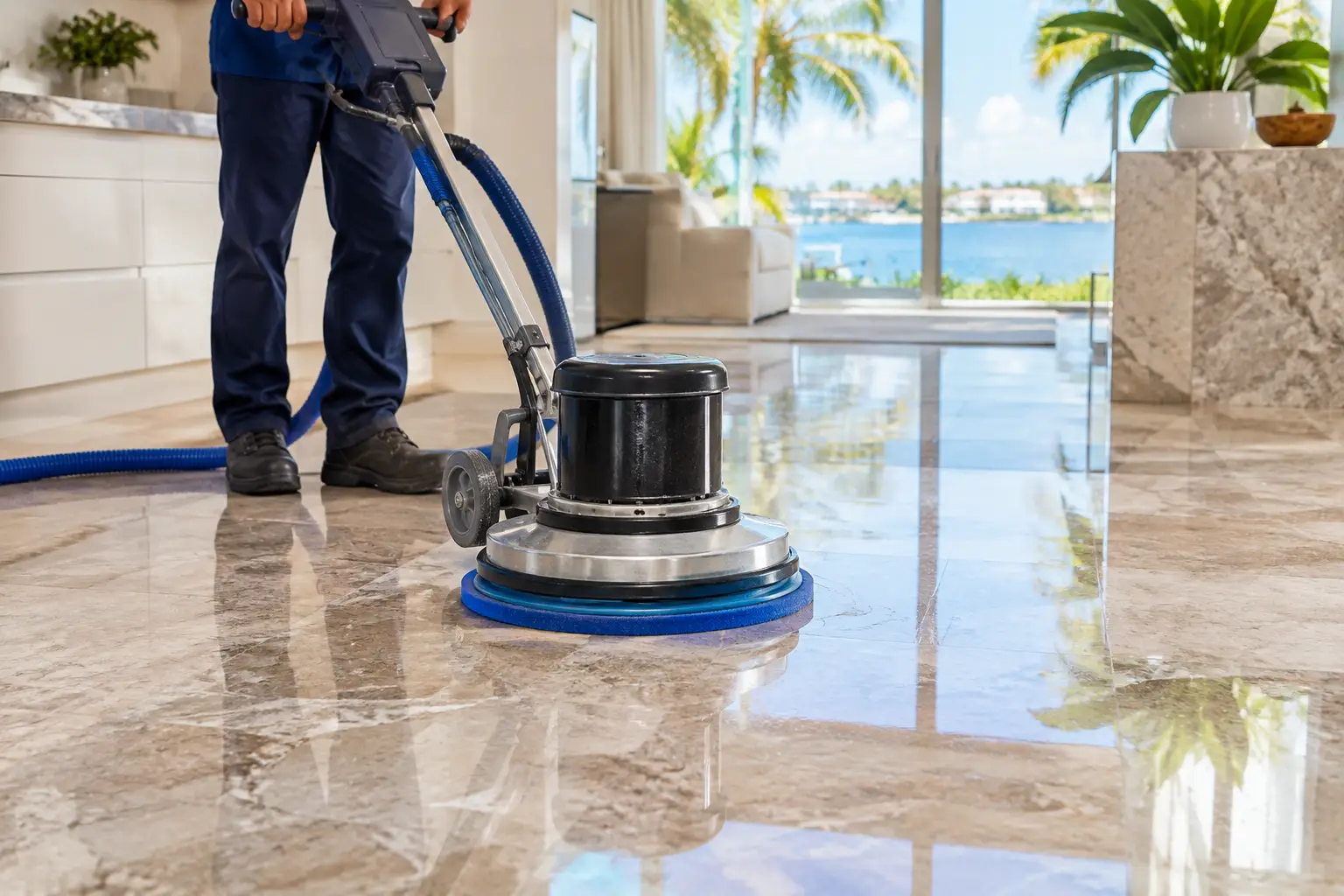
A qualified stone cleaning professional should inspect the material before selecting products or equipment. The process may include dry soil removal, stone-safe pre-treatment, controlled agitation, soil extraction, and a careful rinse. The right method should address both the stone and the surrounding grout without treating them as identical materials.
Sealing may be recommended after cleaning, but only when it fits the stone and its condition. A sealer is not a coating that makes stone maintenance-free. It helps slow absorption and gives you more time to wipe up spills. It will not prevent etching from acidic products, and it cannot fix existing scratches or dull spots.
Dream Clean Orlando approaches hard-surface cleaning with that kind of material-specific care, using professional equipment and straightforward recommendations instead of pushing services a surface does not need.
A Quick Test Before You Assume the Stone Is Ruined
If your stone looks darker in certain areas, place a few drops of clean water on an inconspicuous spot. If the water beads and stays on top, the sealer may still be providing protection. If it quickly darkens the stone, the surface may be absorbing moisture and could benefit from evaluation and resealing.
This is only a basic indicator, not a full diagnosis. Dark spots may also come from oil, moisture below the surface, old topical coatings, or natural variation in the stone. Polished surfaces with cloudy rings or dull patches may be etched rather than dirty.
Natural stone can remain beautiful for decades, but it rewards careful maintenance. Start with a stone-safe cleaner, keep moisture and grit under control, and get help before harsh chemicals turn a cleanable problem into permanent damage.