Restaurant Tile Maintenance Schedule That Works
A restaurant floor can look clean at opening and still have grease working its way into the grout by the lunch rush. That is why a clear restaurant tile maintenance schedule matters. It protects the appearance of your dining room and kitchen, but it also helps reduce slip hazards, odors, pest concerns, and the premature wear that leads to costly replacement.
For Orlando restaurants, humidity adds another complication. Moisture in the air can slow drying, while busy patios, entryways, and kitchen traffic bring in grease, rainwater, sand, and tracked-in soil. Mopping alone has a place, but it cannot pull embedded buildup out of porous grout lines. The best plan combines daily staff routines with scheduled professional deep cleaning.
Start With Your Restaurant’s Traffic and Tile Type
There is no single schedule that fits every restaurant. A quick-service restaurant with a busy fryer station needs more frequent attention than a small wine bar with a limited kitchen. A restaurant with ceramic tile in the dining area may have different needs than one with quarry tile in the kitchen, porcelain in the restrooms, and textured pavers on an outdoor patio.
Before setting a schedule, walk the property and identify the areas that take the most abuse. Usually, that includes the cook line, dish area, bar, restroom entrances, host stand, dining-room walkways, delivery entrance, and any patio or lanai exposed to Florida weather.
Look for grout that has turned dark, sticky, or uneven in color. Check corners and baseboards for buildup, and pay attention to areas that feel slick even after cleaning. Those are signs that your current routine may be spreading residue rather than removing it.
A Practical Restaurant Tile Maintenance Schedule
A useful schedule separates routine surface cleaning from the deeper work required to keep tile and grout in good condition. Your staff handles the first line of defense. Professional service handles the soil, grease, and staining that ordinary equipment cannot reach.
Every shift: Remove spills before they become a safety problem
Sweep or vacuum loose debris before wet mopping. Sand, crumbs, and small bits of food act like abrasives under shoes and chair legs, slowly dulling the tile surface. In kitchen areas, spot-clean oil and food spills immediately using a cleaner appropriate for the floor material.
Use clean mop water and change it often. Reusing gray, greasy water is one of the fastest ways to leave a film on tile and push soil into grout lines. Allow floors to dry fully before reopening the area to staff or guests, and use wet-floor signage whenever needed.
Restrooms deserve a separate set of tools and mop heads. This simple step helps limit cross-contamination and keeps restroom odors from following equipment into dining areas.
Daily: Clean for appearance and sanitation
At closing, thoroughly sweep and mop all tiled areas. Kitchen floors may need a degreasing product, but stronger is not always better. Using too much chemical, or failing to rinse it properly, can leave a residue that attracts dirt and creates a slippery surface.
Pay close attention to grout lines near fryers, dish machines, soda stations, and floor drains. These areas collect grease and moisture faster than the middle of the floor. If your team is seeing recurring dark grout in the same places, add targeted scrubbing to the closing checklist rather than waiting for it to become a major restoration job.
Weekly: Detail the trouble spots
Once a week, move lightweight equipment and clean underneath shelving, service counters, and portable kitchen stations. Detail the edges where floors meet walls, since grease and dirty water often settle there.
This is also a good time to inspect caulk, cracked grout, and loose tile. Cleaning will not fix failed grout or a damaged floor, but catching issues early can prevent water from getting below the tile. In Orlando, where humidity is already high, trapped moisture can lead to persistent odors and more difficult cleanup.
Monthly: Inspect grout and check floor performance
A monthly inspection should go beyond whether the floor looks presentable from the doorway. Review the grout color in high-traffic lanes compared with less-used sections. If the grout is noticeably darker, sticky, or blotchy, soil is likely building below the surface.
Check whether water beads on the grout or soaks in quickly. Water absorption can indicate that a grout sealer has worn down. Sealer does not make grout maintenance-free, but it can make routine cleanup easier and slow down staining when it is applied to clean, dry grout.
Keep a simple record of problem areas, spills, repairs, and professional cleanings. For multi-location operators and property managers, this makes it much easier to budget and compare conditions from one visit to the next.
Quarterly or semiannually: Schedule professional deep cleaning
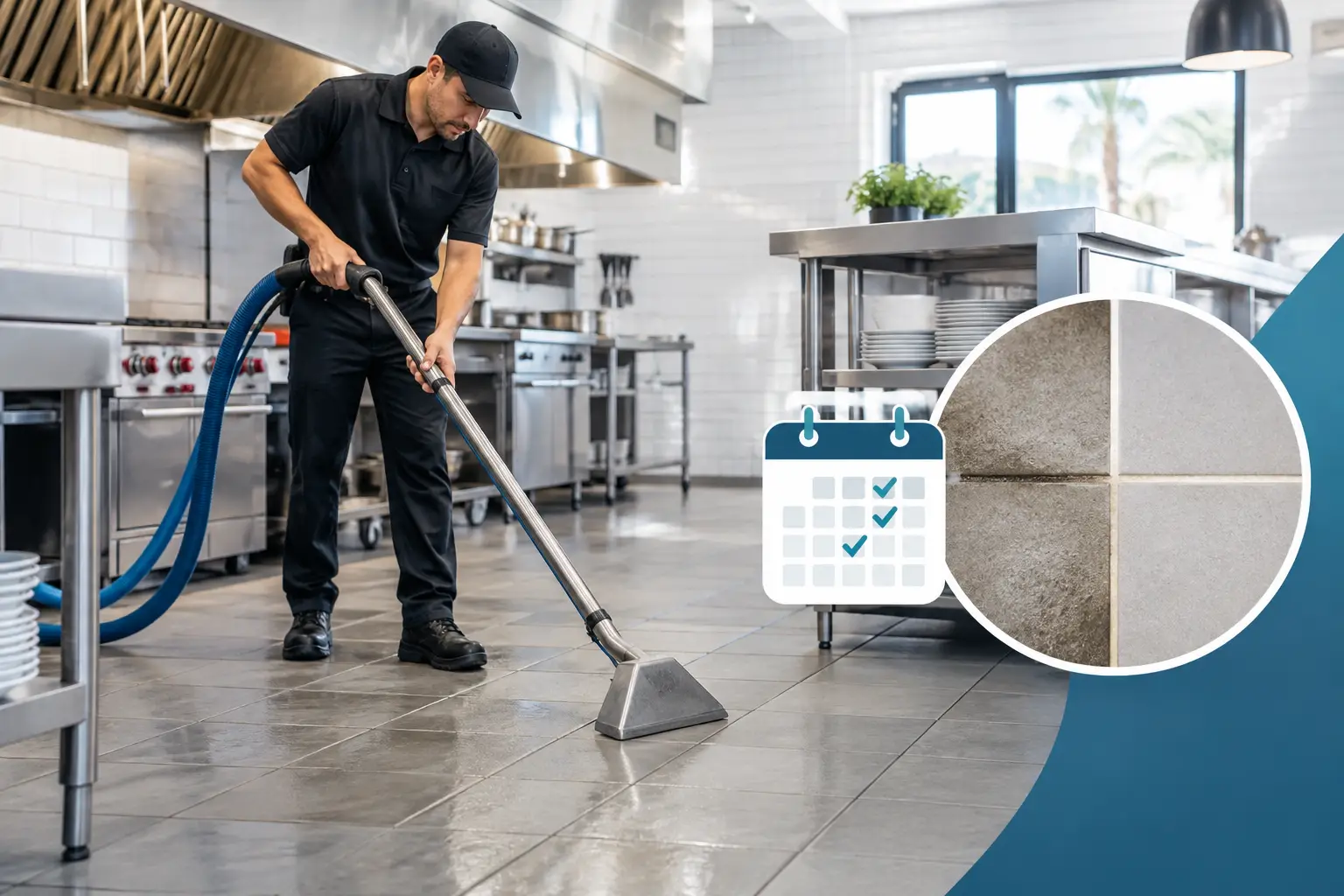
Most restaurants benefit from professional tile and grout cleaning every three to six months. Busy kitchens, buffet areas, fast-casual locations, and restaurants with frequent rainwater traffic may need quarterly service. A lower-volume dining room with consistent daily care may be fine with a semiannual schedule.
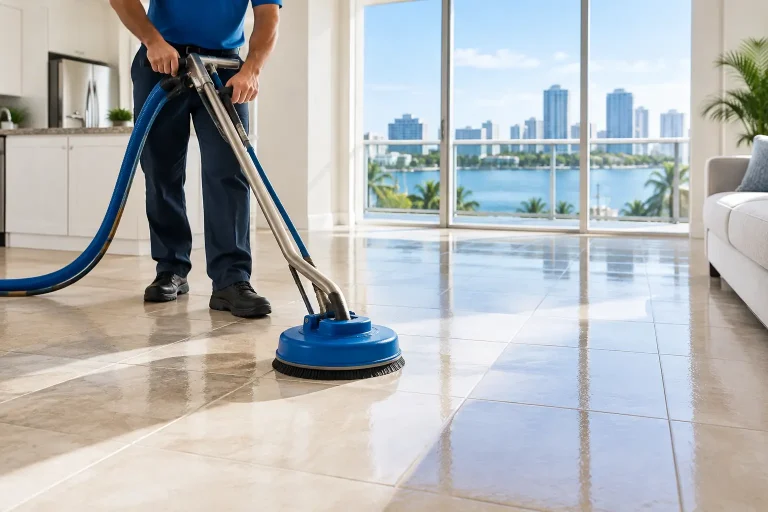
Professional cleaning is not just a more aggressive version of mopping. A qualified tile and grout specialist uses the right pre-treatment for the soil, agitation to loosen buildup, and high-pressure extraction to flush dirty solution out of grout lines. The goal is to remove grime rather than leave it behind.
Dream Clean Orlando uses professional equipment to help lift embedded soil from commercial tile and grout, restoring a cleaner, more even appearance without the sales pressure that often comes with franchise-style service. For a restaurant preparing for an inspection, grand reopening, seasonal rush, or ownership change, a deep clean can make a visible difference quickly.
What Can Damage Restaurant Tile and Grout
The wrong cleaning approach can create more work than it saves. Avoid using acidic cleaners on natural stone, since they can etch the surface and weaken cement-based grout. Harsh chemicals can also discolor grout, damage finishes, or react poorly with other products already on the floor.
Do not mix cleaning chemicals. Combining products, especially bleach with ammonia-based cleaners or acids, can produce dangerous fumes. Follow product labels, train employees on dilution, and make sure the ventilation is adequate in enclosed kitchens and restrooms.
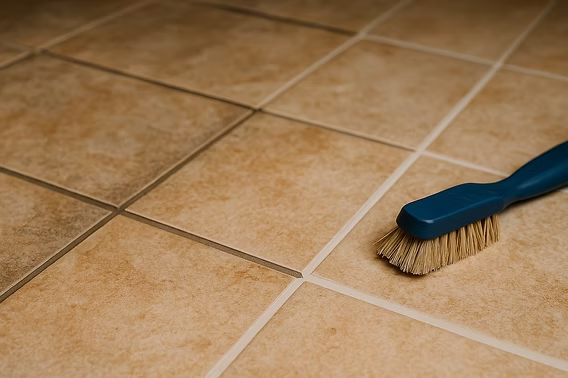
Abrasive pads and overly stiff brushes can scratch some tile finishes. They may also roughen grout, making it easier for dirt to stick in the future. If you are unsure what kind of tile you have, test a small hidden area or ask a cleaning professional before changing products.
Keep the Schedule Realistic for Your Team
The best maintenance plan is one your staff can actually follow during a busy service week. Assign responsibilities by shift rather than leaving floor care as a vague closing duty. Make sure employees know which product is used in each area, how much to dilute it, and where clean tools are stored.
If your restaurant has recurring issues despite regular cleaning, the answer is not always more chemicals or longer mop time. It may be worn sealer, deeply embedded kitchen grease, poor drainage, aging grout, or equipment that is not removing dirty water effectively. A professional assessment can help identify the cause before you spend money on products that only mask the problem.
Clean tile sends a quiet but clear message to guests and staff: this restaurant pays attention. Keep the daily work consistent, schedule deep cleaning before floors look worn out, and treat persistent grout discoloration as a maintenance signal rather than something you have to live with.