Common Tile Odor Causes and How to Stop Them
A tile floor can look clean and still make a kitchen, bathroom, or entryway smell off. That is because many tile odor causes are not sitting on the surface where a mop can reach them. They are trapped in porous grout lines, textured tile, residue layers, or moisture beneath and around the floor.
For Central Florida homeowners and property managers, humidity can make the problem more noticeable. A lingering musty, sour, greasy, or sewer-like smell is more than an inconvenience. It is a sign that the floor, shower, or surrounding plumbing needs a closer look.
Tile Odor Causes: What Is Really Behind the Smell?
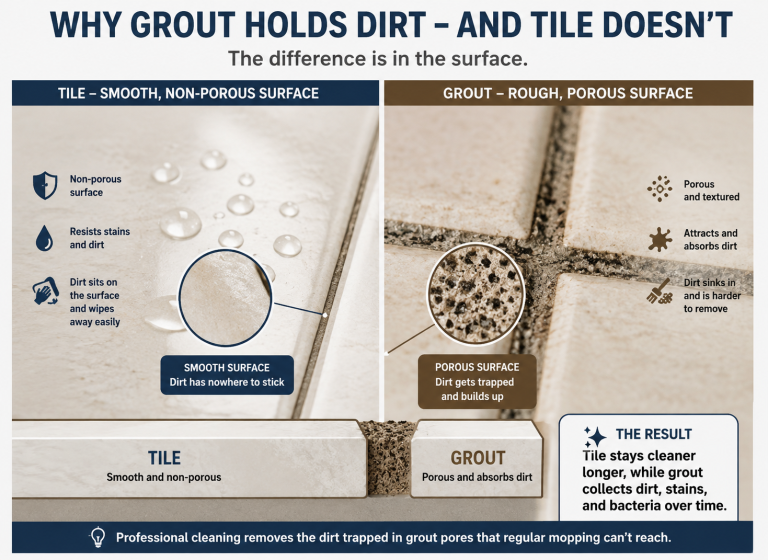
Tile itself is usually not the source of an odor. Ceramic and porcelain are generally nonporous or low-porosity materials, especially when glazed. The trouble often starts in the grout, along edges and corners, under residue, or where water has found a path behind the tile.
Embedded dirt, food, and grease
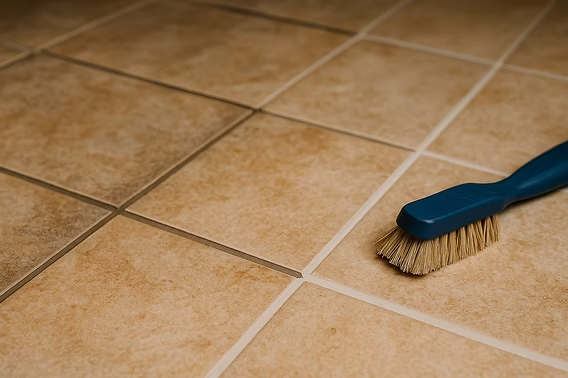
Kitchen tile can collect far more than visible crumbs. Fine food particles, cooking oil, pet traffic, and everyday soil settle into grout pores and the texture of some tile finishes. Over time, that buildup can develop a stale or greasy odor, especially near stoves, trash areas, refrigerators, and frequently used walkways.
Regular mopping may spread dirty water across the floor instead of removing what is lodged below the surface. Some cleaners also leave a film behind. That film can hold onto soil and make the floor feel tacky or dull, even after it has dried.
Moisture and microbial growth in grout
Grout is porous unless it has been properly sealed and maintained. In bathrooms, laundry rooms, entryways, and around pet bowls, repeated moisture can soak into those tiny openings. When moisture combines with soap residue, skin oils, and ordinary household dirt, it creates conditions where odor-causing bacteria and mildew can thrive.
A musty smell does not automatically mean there is dangerous mold behind every tile. But it does mean moisture is present somewhere it should not remain. If the odor gets stronger after a shower, rainstorm, or floor mopping, it is worth investigating promptly.
Soap scum and body oils in showers
Shower walls and floors deal with a daily mix of soap, shampoo, conditioner, body oils, and hard-water minerals. This buildup can feed bacteria and leave a sour or musty odor that returns soon after routine cleaning.
The shower floor is a frequent trouble spot because it stays damp longer than the walls. Grout lines, caulk joints, corners, and the area around the drain all deserve attention. If a shower has a persistent smell even after surface cleaning, the issue may be embedded residue, poor drainage, failed caulk, or moisture behind the tile.
Pet accidents and organic spills
Pet urine, spilled drinks, tracked-in mud, and other organic messes can soak into grout and along baseboards before anyone notices. The visible spot may disappear, but the odor can return whenever humidity rises or the floor gets wet.
This is particularly common with older grout, unsealed grout, and textured tile. Store-bought deodorizers may mask the smell for a short time, but they do not remove the residue causing it. The affected area needs to be flushed, extracted, and fully dried.
Dirty mop water and cleaner residue
Sometimes the floor smells worse after cleaning because the cleaning method is part of the problem. A mop bucket quickly becomes contaminated, and repeated passes can deposit dirty water into grout lines. Using too much cleaner can also leave a sticky layer that attracts soil.
For light maintenance, use a clean microfiber mop, change water often, and follow product dilution directions. Avoid coating the floor with heavy waxes, oils, or strongly fragranced products. They can make professional restoration more difficult and may leave behind a slippery film.
Drain, plumbing, or moisture problems near tile
Not every odor near tile is a tile-cleaning issue. A sewage or rotten-egg smell may point to a dry drain trap, a clogged drain, a leaking toilet seal, or another plumbing concern. A sharp chemical smell could be from incompatible cleaning products. These situations should be addressed at the source rather than covered with fragrance.
Watch for loose tile, soft drywall, bubbling paint, cracked grout, recurring stains, or water appearing outside the shower or toilet area. Those signs can indicate a leak or water intrusion behind the finished surface. Cleaning can improve surface contamination, but it cannot repair a plumbing leak or damaged substrate.
Why Mopping Does Not Solve Most Tile Odor Causes
Mopping is useful for everyday dust and light soil. It is not designed to pull embedded grime, bacteria, oily residue, and moisture out of deep grout lines. Grout has a rough, absorbent structure, and standard household tools do not generate enough heat, agitation, or extraction to thoroughly rinse it.
That is why floors can look acceptable from a distance while still smelling unpleasant up close. The same issue affects shower tile: a spray cleaner can brighten the surface, yet leave residue in grout joints and textured areas.
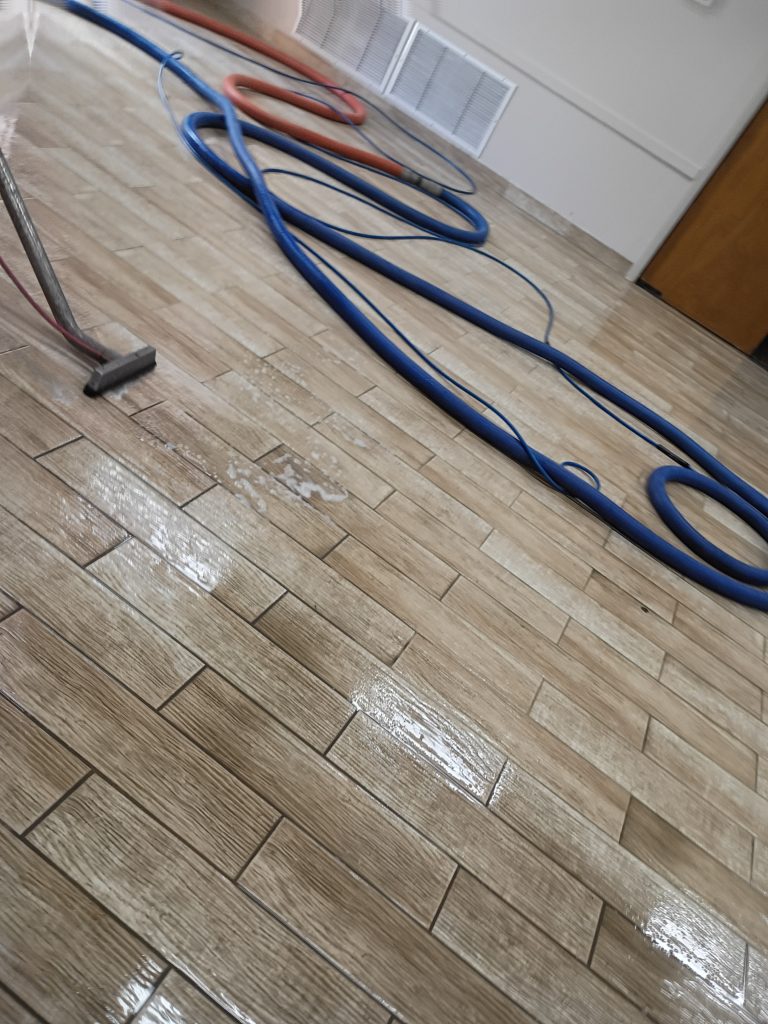
Professional tile and grout cleaning uses controlled cleaning solutions, specialized agitation, and high-pressure rinsing with immediate extraction. The goal is not simply to make the floor smell better for a day. It is to remove the material feeding the odor rather than push it deeper into the grout.
How to Narrow Down the Source Before Cleaning
Start by noticing when and where the odor is strongest. If it is concentrated in the kitchen, inspect grout near cooking and food-prep areas. If it appears after showers, check the shower floor, drain, corners, and caulk lines. If the smell returns after rain or mopping, moisture is likely involved.
Then make sure the floor has time to dry completely. Run bathroom ventilation, use fans where needed, and avoid leaving wet bath mats or towels on tile. A damp mat can transfer odor and moisture into grout lines, making it seem as though the tile itself is the only problem.
For small, recent spills, clean the area with a pH-appropriate tile cleaner and dry it thoroughly. Natural stone, travertine, and some specialty surfaces need more care than ceramic or porcelain. Acidic cleaners can etch stone, weaken grout, and create a bigger restoration job. When in doubt, avoid harsh chemicals and test any product in an inconspicuous spot.
When Professional Tile Cleaning Is the Better Choice
A professional cleaning is a practical option when odors keep returning, grout remains dark after mopping, shower buildup is heavy, or a property needs to be ready for tenants, guests, customers, or inspections. Restaurants, apartment communities, medical facilities, offices, and retail spaces often need deeper cleaning because daily traffic adds soil faster than routine staff maintenance can remove it.
Dream Clean Orlando uses truck-mounted steam-cleaning equipment, industrial-grade solutions, high-pressure rinsing, and extraction to flush out embedded buildup from tile and grout. The process is tailored to the surface, whether it is ceramic, porcelain, textured tile, travertine, or another hard flooring material. Proper extraction matters because it removes the loosened contamination instead of leaving it behind to dry in the grout.
After cleaning, grout sealing can help reduce future absorption. Color sealing may also be a good fit for grout that is permanently discolored but structurally sound. Sealing is not a substitute for cleaning, and it will not fix cracked grout or leaking fixtures, but it can make routine maintenance easier and help protect the restored appearance.
Keep the Odor From Coming Back
Once the source has been removed, consistent low-moisture maintenance makes a real difference. Sweep or vacuum grit before mopping, clean spills quickly, and let floors dry rather than allowing standing water to sit along grout lines. In showers, use ventilation during and after bathing, hang mats to dry, and address failing caulk or grout before water reaches areas behind the tile.
A clean-smelling tile floor should not require heavy perfume to seem fresh. When the grout is properly cleaned, dried, and protected, the room feels cleaner because the source of the odor has been handled, not hidden.