Restaurant Floor Restoration That Holds Up
A restaurant floor can look clean after the nightly mop and still hold grease, tracked-in soil, food residue, and bacteria deep in the grout lines. That is why restaurant floor restoration is more than a cosmetic service. It is a practical way to improve appearance, support a cleaner operation, and help protect the flooring you have already invested in.
For restaurant owners, managers, and property managers in Central Florida, the problem usually builds slowly. The tile loses its original color, grout turns dark or uneven, and the floor starts to look worn even when the dining room, kitchen, or restroom has been cleaned. Replacing tile may seem like the only answer, but professional restoration can often make a major visible difference without the cost and disruption of a renovation.
Why Restaurant Floors Get Dirty Faster Than Expected
Restaurants put hard floors through conditions most homes never face. Grease from the kitchen can travel under shoes and carts. Spilled drinks leave sticky residue that attracts more soil. Guests track in water, dirt, and outdoor debris from parking lots and sidewalks. Restroom floors deal with soap residue, hard-water buildup, and frequent foot traffic.
Routine sweeping and mopping are necessary, but they have limits. A mop can spread dirty water across porous grout or textured tile instead of removing embedded contamination. Over time, that buildup can make a floor look dull, blotchy, and permanently stained.
The type of tile matters, too. Smooth porcelain may clean differently than textured ceramic, natural stone, travertine, or quarry-style commercial tile. Using the wrong chemical or abrasive tool can leave a haze, damage a sensitive surface, or weaken grout. Restoration should be matched to the material, the level of soil, and the demands of the space.
What Professional Restaurant Floor Restoration Addresses
A proper restoration service focuses on the soil that ordinary cleaning leaves behind. The goal is not simply to make tile shine for a day. It is to remove buildup from the tile surface and flush contaminants from grout lines so the floor is cleaner and easier to maintain afterward.
In a restaurant setting, professional cleaning commonly addresses grease film, food stains, darkened grout, beverage spills, tracked-in dirt, soap scum in restrooms, and mineral deposits around sinks or entrances. It can also improve the overall color consistency of grout, which often makes a larger visual difference than owners expect.
This matters in guest-facing areas where a worn floor can affect the impression of the entire restaurant. It matters just as much in back-of-house spaces, where grease and residue can contribute to difficult daily cleaning and poor-looking work areas. A restored floor helps staff start with a genuinely clean surface instead of trying to maintain layers of old buildup.
Cleaning Is Not the Same as Replacing
Restoration is not a promise that every damaged floor will become brand new. Cracked tile, missing grout, deep etching, and permanent material damage may require repair or replacement. But many floors that appear ready for replacement are actually suffering from years of compacted soil and unprotected grout.
A professional evaluation helps separate cleanable buildup from true damage. That distinction can save a restaurant from spending renovation dollars before exploring a more cost-effective option.
The Restoration Process for Commercial Tile and Grout
The right process begins with an inspection. A technician should identify the tile type, grout condition, traffic patterns, visible stains, and areas of concern such as kitchen entrances, drink stations, restrooms, host stands, and dishwashing areas. This is also the time to identify loose grout, cracked tile, or surfaces that need a gentler approach.
Next, industrial-grade cleaning solutions are applied to break down embedded grease, soil, and residue. The products and dwell time should be selected for the floor material and the type of buildup present. Stronger is not always better. On sensitive stone or older grout, the wrong solution can create an expensive problem.
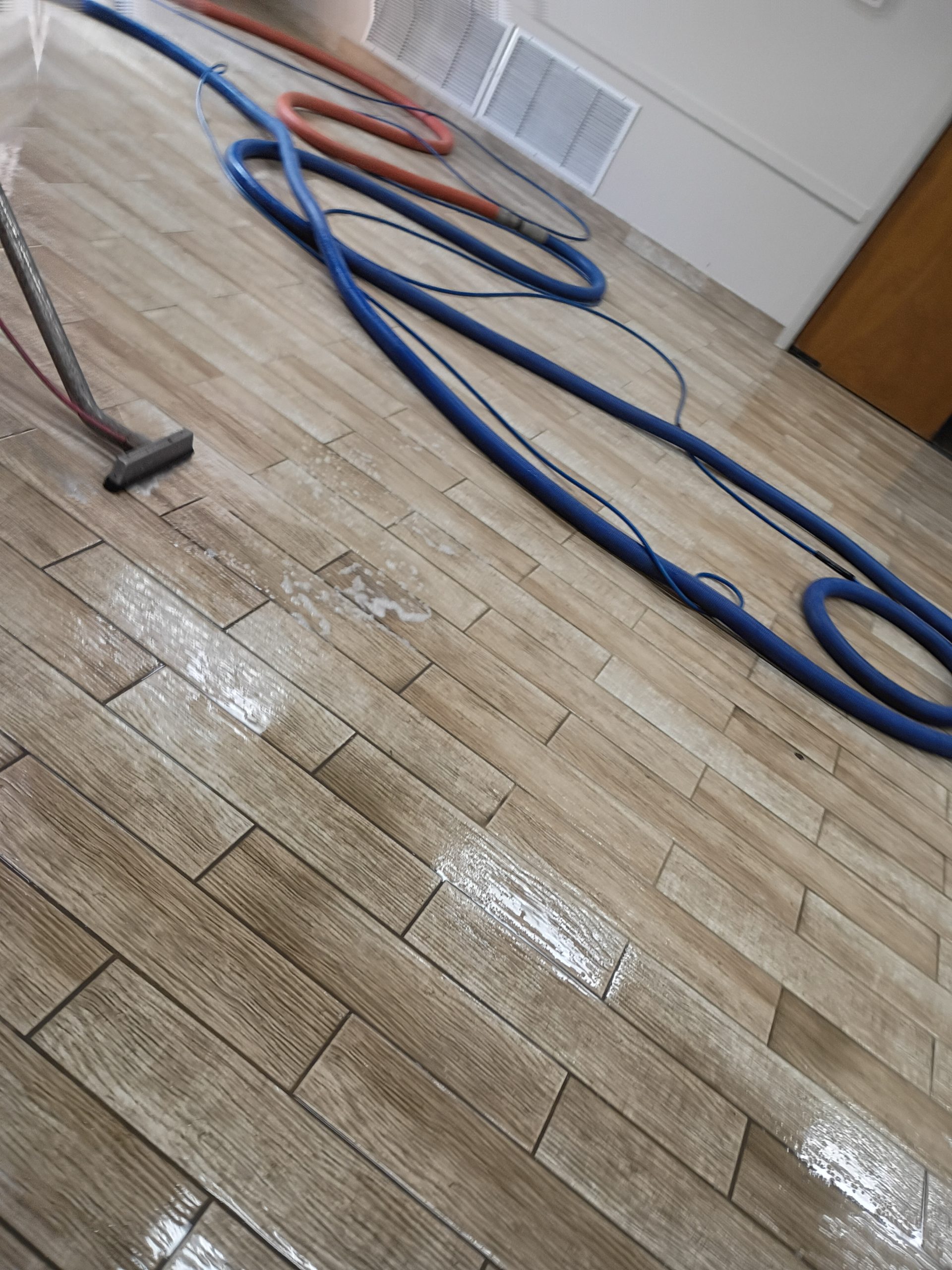
Truck-mounted steam cleaning and high-pressure extraction then provide the heat, pressure, and recovery needed to lift contamination from the surface and grout lines. Rather than pushing dirty water around, extraction removes loosened soil from the floor. Specialized tools help reach edges, corners, and grout lines where mops do not do much work.
After cleaning, the floor should be inspected again. Some grout may benefit from repair, while stained but intact grout may be a candidate for color sealing. A quality service is detail-focused because the areas around baseboards, equipment, fixtures, and transitions are often where restaurant floors show the most buildup.
Why Grout Sealing Often Makes Sense
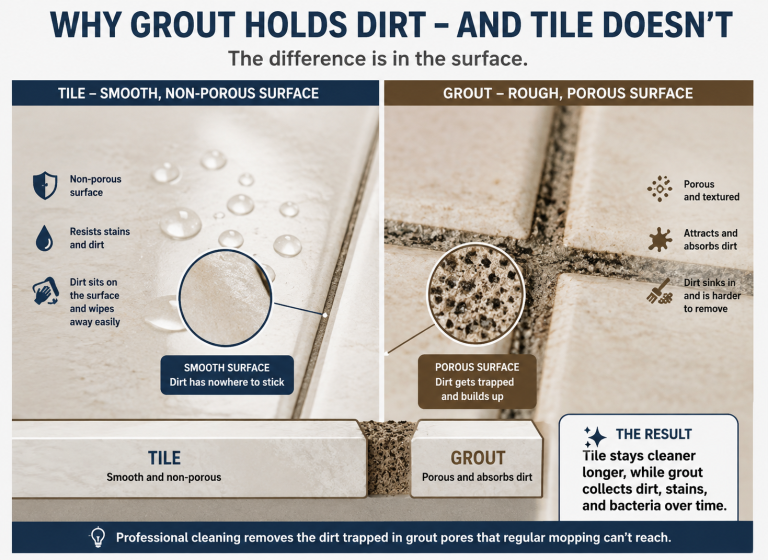
Grout is more porous than tile, which is why it absorbs spills, grease, and dirty water so easily. Once it has been professionally cleaned, sealing can help reduce future staining and make regular maintenance more manageable.
Clear grout sealing is a good fit when the grout color is still even and the goal is added protection. Color sealing is different: it can restore a more uniform grout appearance while creating a protective barrier over the grout lines. For a dining room or restroom with permanently discolored grout, color sealing can make the entire floor look more consistent without removing and reinstalling tile.
There are trade-offs. Sealing is not a substitute for daily cleaning, and it will not repair loose or failing grout. High-abuse kitchen areas may need more frequent maintenance than a lightly used office hallway. Still, for many restaurants, protecting clean grout is far less expensive than waiting until it looks beyond saving.
Scheduling Restoration Without Disrupting Service
Restaurant operations do not stop just because the floors need attention. The best scheduling plan depends on the size of the area, the amount of buildup, drying conditions, and whether grout repair or sealing is included. A small restroom may be handled differently from a full dining room or commercial kitchen.
For many locations, after-hours service, early-morning appointments, or work completed in sections can reduce disruption. The key is to allow enough time for cleaning, extraction, drying, and any protective treatment before staff and guests return to the space. Rushing the process can compromise results or create unnecessary slip concerns.
Before scheduling, be clear about access, furniture movement, equipment near the work area, and the condition of the floor. A reliable local cleaning company should explain the scope of work, provide honest expectations, and help you choose a service window that fits your operation.
Daily Habits That Protect Restored Floors
Professional cleaning works best when it is paired with a practical maintenance routine. Staff should sweep or vacuum dry debris before mopping, especially near entrances and food-prep areas. Grit acts like sandpaper under shoes and can wear down the appearance of tile over time.
Use clean mop water and a cleaner designed for the floor type. A dirty mop bucket can redeposit grease and soil into grout lines. Avoid leaving excess water on the floor, particularly around grout, tile edges, and transitions. Entry mats should also be cleaned regularly so they trap dirt instead of becoming another source of it.
Pay special attention to spill response. Soda, sauces, grease, and restroom residue are easier to remove when handled quickly. If the floor begins looking dull again shortly after mopping, that is usually a sign that surface cleaning alone is no longer enough.
When It Is Time to Call a Professional
Consider professional restaurant floor restoration when grout stays dark after cleaning, tile looks hazy or greasy, floors feel sticky underfoot, or the dining room looks older than the rest of the restaurant. It is also a smart service before a health-focused inspection, a reopening, a remodel reveal, or a busy season when guest impressions matter even more.
Dream Clean Orlando provides professional commercial tile and grout cleaning, restoration, and protective sealing for restaurants across Orlando and Central Florida. With professional equipment, detail-focused service, and scheduling built around local businesses, the goal is simple: bring the floor back to a cleaner, more maintainable condition without overselling what the material can do.
A well-restored restaurant floor will not replace good daily habits, but it gives your team a cleaner foundation to maintain. When tile and grout are no longer carrying years of grease and traffic, the difference shows up in the details guests and staff notice every day.