
How to Remove Grease From Grout Without Damage
A kitchen floor can look clean from standing height and still have dark, sticky grout lines around the stove, island, and walkways. Grease does not stay on the surface like a loose crumb. It settles into porous grout, grabs dust and food residue, and gradually makes the whole floor look dull. To remove grease from grout effectively, the cleaning method has to break down oily buildup without harming the grout, tile finish, or surrounding surfaces.
Routine mopping helps with fresh spills, but it often moves diluted grease across the floor instead of pulling it out of the grout lines. That is why grout can stay discolored even when the tile itself looks reasonably clean.
Why kitchen grout holds onto grease
Grout is naturally more absorbent than ceramic or porcelain tile. Unless it has been properly sealed and maintained, its tiny pores collect cooking oils, tracked-in soil, cleaning product residue, and moisture. Near a range or cooking area, airborne grease can also settle on the floor over time.
Once grease is embedded, adding more water is not always the answer. A wet mop may leave behind residue, especially if too much cleaner is used or the floor is not rinsed thoroughly. The residue becomes a magnet for more dirt, making grout lines appear darker shortly after cleaning.
Textured tile, light-colored grout, and busy family kitchens tend to show the problem fastest. In Central Florida homes, humidity can also slow drying after mopping, which gives soil more opportunity to cling to damp grout.
How to remove grease from grout at home
For light to moderate kitchen grease, start with the mildest practical method. Sweep or vacuum first. Cleaning over loose grit can push abrasive particles into grout and leave the floor looking worse.
Use a pH-neutral tile and grout cleaner or a product specifically labeled as a degreaser that is safe for your tile type. Apply it to a small section, following the label directions. Give the solution enough dwell time to loosen the oil, but do not let it dry on the surface. Then scrub the grout lines with a stiff nylon grout brush, working in short sections.
Wipe up the loosened soil with clean microfiber towels or rinse lightly and extract the dirty water with a wet vacuum if one is available. Change towels and rinse water often. Reusing dirty mop water is one of the quickest ways to redeposit grease into grout lines.
A baking soda paste can sometimes help with a small, isolated greasy spot on durable ceramic or porcelain tile. Apply it only to the grout, scrub gently with a nylon brush, then rinse and dry the area. This is not a replacement for a true degreasing process across an entire kitchen, and it should not be used aggressively on delicate surfaces.
What not to use on greasy grout
Avoid treating every grout problem with the strongest chemical available. Harsh acids can damage grout, etch natural stone, dull polished finishes, and weaken adjacent caulk. Bleach may lighten some organic staining, but it does not reliably dissolve heavy grease. It can also create fumes and discoloration issues if used improperly.
Never mix bleach with ammonia, vinegar, acids, or other cleaning products. Do not use steel wool, wire brushes, or highly abrasive scouring powders. They can scratch tile, wear away grout, and create a rougher surface that holds more dirt later.
Vinegar is also a poor choice for marble, travertine, limestone, and other natural stone. If your floor is natural stone or you are unsure what material you have, use a stone-safe cleaner and test a hidden area first.
When scrubbing is not enough
If grout still feels tacky, looks uneven, or remains dark after repeated careful cleaning, the grease has likely moved beyond the surface. This is common in older kitchens, rental properties, restaurants, break rooms, and homes where the floor has been mopped for years without deep extraction.
Professional tile and grout cleaning addresses buildup differently. A trained technician uses industrial-grade cleaning solutions matched to the surface, agitates the grout lines with the proper tools, and follows with high-temperature, high-pressure extraction. The goal is not simply to make grease disappear from view. It is to flush suspended soil and oily residue out of the grout instead of spreading it across the floor.
Truck-mounted equipment provides the heat, pressure, and extraction needed for heavily soiled tile while recovering dirty water quickly. That combination can make a noticeable difference on grout lines that have resisted store-bought products and hand scrubbing. It also helps reduce the amount of moisture left on the floor compared with repeatedly flooding an area with a mop.
Professional service is especially worthwhile when grease is spread across a large kitchen, when grout has not been cleaned in years, or when the tile has a textured finish that is difficult to maintain. For commercial kitchens and food-service spaces, cleaning needs may also be influenced by safety standards, traffic levels, and the condition of nearby baseboards, caulk, and transitions.
Protect grout after the grease is gone
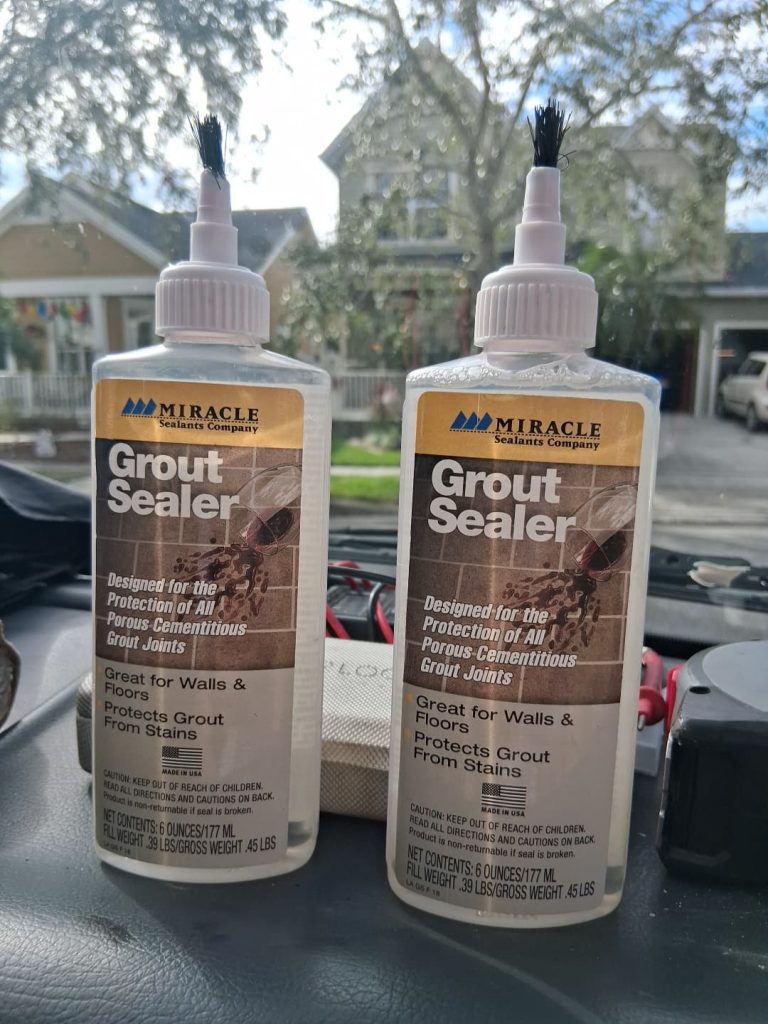
Deep cleaning is the reset. Sealing is what helps protect that reset. After grout is thoroughly cleaned and dry, a quality penetrating sealer can reduce how quickly oils, spills, and soil are absorbed. It does not make grout completely stain-proof, but it gives you more time to clean up a spill before it becomes a permanent-looking mark.
For grout that has permanent discoloration, grout color sealing may be a better restoration option than replacement. This process applies a durable, uniform color while helping close the porous surface. It can be a practical choice when the grout is structurally sound but no longer has a consistent appearance.
Sealant performance depends on the grout condition, tile material, cleaning habits, and traffic level. A frequently used family kitchen or commercial area usually needs more attention than a lightly used guest bathroom. Before sealing, any grease, soap film, or old residue must be removed. Sealing over contamination can trap the problem and limit results.
Keep kitchen grout from getting greasy again
The simplest maintenance routine is also the most consistent one. Wipe cooking splatter as it happens, sweep regularly, and damp mop with a properly diluted cleaner intended for your floor. Use clean water and a clean mop head, especially around the range and kitchen entrances.
Pay extra attention to the perimeter around the stove, dishwasher, refrigerator, and trash area. Those spots collect grease and crumbs that are easy to miss during a quick weekly cleaning. A small floor mat near the cooking zone can reduce splatter reaching the grout, as long as it is cleaned underneath regularly.
Avoid using too much floor cleaner. More product does not mean a cleaner floor. Overuse can leave a film that attracts dirt and makes tile look cloudy. If your grout starts darkening again soon after mopping, residue buildup may be part of the problem.
A safer answer for stubborn kitchen floors
When a kitchen floor still looks dirty after careful cleaning, it does not automatically need new tile or a costly renovation. Often, the tile is in good shape and the grout simply needs a deeper process than household tools can provide. A professional inspection can identify whether grease, embedded soil, failed sealer, discoloration, or grout damage is affecting the result.
Dream Clean Orlando provides detailed tile and grout cleaning, steam extraction, restoration, and sealing for homes and businesses throughout Central Florida. For floors that have become sticky, dull, or permanently dark around the grout lines, the right cleaning process can bring the original look back into view and make regular maintenance much easier.
A clean kitchen should not require endless scrubbing on hands and knees. Address grease early when you can, protect the grout once it is clean, and bring in professional extraction when the buildup has settled too deep for a mop to reach.