
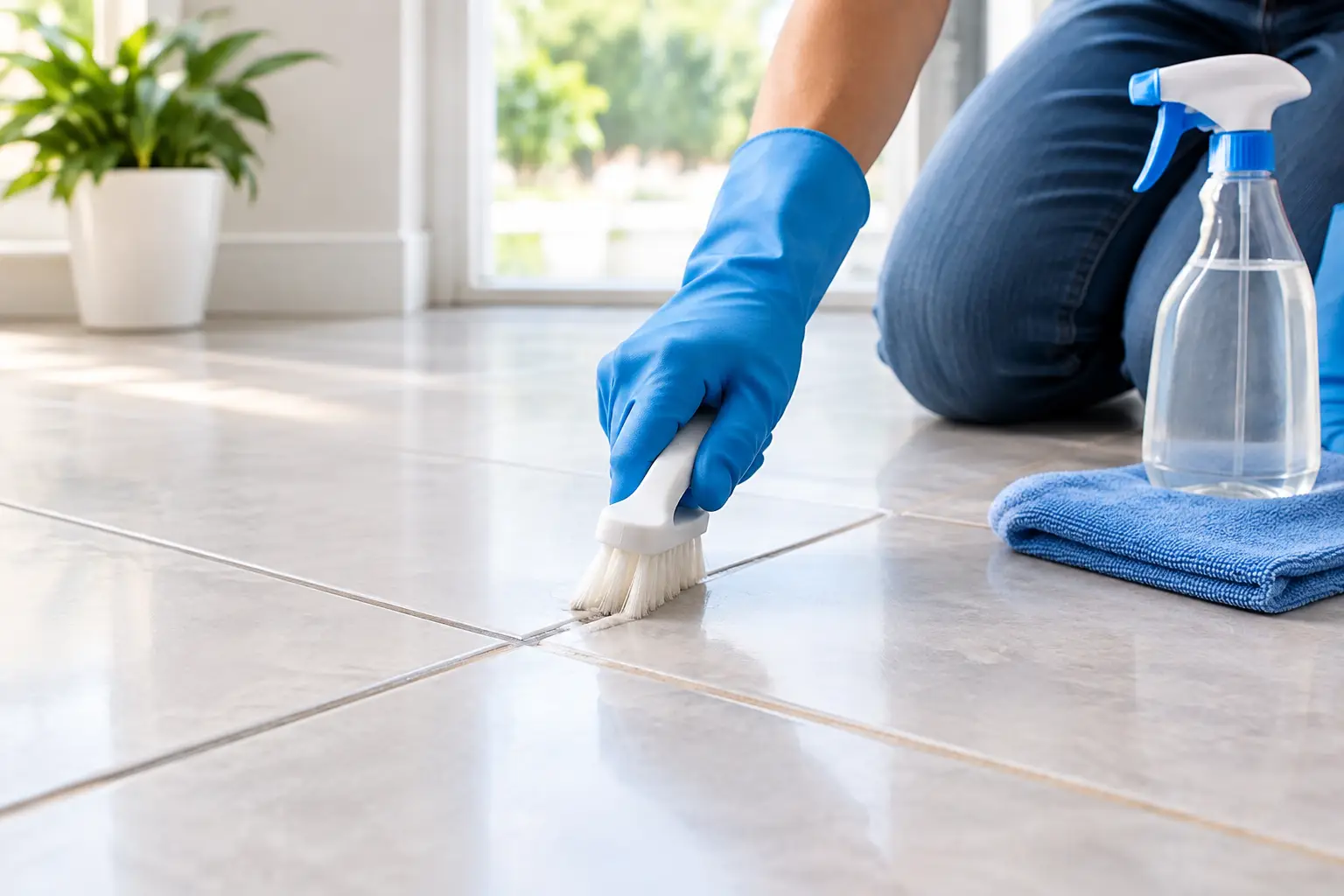
How to Clean Grout Safely Without Damaging Tile
A bathroom floor can look dirty even right after you mop it when the grout lines have turned gray, brown, or yellow. That is because grout is porous, so it holds onto soap residue, body oils, hard-water minerals, and tracked-in soil. Knowing how to clean grout safely means removing that buildup without scratching tile, weakening the grout, or creating a chemical hazard in a small, humid room.
For most Orlando homes, a gentle cleaning method used consistently is safer than reaching immediately for the strongest cleaner on the shelf. Florida humidity can keep bathrooms damp longer, and that moisture gives mildew, soap film, and mineral deposits more time to settle into grout. The goal is clean, bright grout that stays intact – not a quick result that causes damage a few months later.
Start by Identifying What Is on the Grout
Not every dark grout line has the same cause. Kitchen grout often has greasy residue and fine soil. Bathroom floors may have soap film, hairspray residue, mildew, or hard-water deposits. Shower grout is exposed to constant moisture and may show pink, orange, black, or gray discoloration. Entryways, lanais, and hallways usually collect sand, soil, and oils carried in on shoes.
The difference matters because scrubbing hard will not remove every stain. Mineral scale needs a different approach than mildew, and old embedded soil may require professional extraction rather than more elbow grease. If the grout is cracked, missing, soft, or crumbling, cleaning will not repair it. Avoid soaking damaged grout until it can be repaired.
Also look at the tile itself. Glazed ceramic and porcelain tile are usually durable, but natural stone such as travertine, marble, limestone, and slate needs special care. Acidic products can permanently dull or etch many stone surfaces. When you are unsure what your tile is made of, use the mildest method first and test it in a hidden spot.
How to Clean Grout Safely: The Basic Method
For routine dirt and light discoloration, start with warm water, a pH-neutral tile cleaner or a small amount of mild dish soap, and a stiff nylon grout brush. A nylon brush is firm enough to work into grout lines without the metal bristles or abrasive pads that can scratch tile and wear down grout.
Sweep or vacuum first. Grit left on the floor can act like sandpaper while you scrub. Then apply the cleaning solution to a small section, allow it to sit for a few minutes, and scrub the grout lines in short back-and-forth strokes. Work in manageable areas so the cleaner does not dry on the tile.
Rinse thoroughly with clean water and dry the surface with a towel or microfiber mop. This rinse-and-dry step is easy to skip, but it makes a real difference. Leftover cleaner can attract more soil, and standing water encourages mildew in bathrooms and showers.
A basic cleaning setup includes a nylon grout brush, a pH-neutral cleaner, a spray bottle or bucket of clean rinse water, microfiber towels, and gloves. Open a window or run the exhaust fan, especially when working in a shower or enclosed bathroom.
When Baking Soda Can Help
Baking soda is a reasonable option for small areas of ordinary grime because it provides mild scrubbing action. Make a paste with baking soda and a little water, spread it over the grout, wait about 10 minutes, then gently scrub with a nylon brush. Rinse completely afterward.
This method is best for spot cleaning, not for restoring an entire large floor. It can take considerable time, and aggressive scrubbing still risks wearing away the grout surface. Baking soda will not reliably remove deep stains, heavy grease, or discoloration that has been sitting in a shower for years.
Hydrogen peroxide is sometimes used for light organic stains on white or light-colored grout. If you choose to try it, test a small hidden area first, use it sparingly, keep it away from natural stone, and never combine it with other cleaners. Colored grout, grout dye, and certain sealers may react differently, so caution matters.
Clean Mold and Mildew Without Creating a Bigger Problem
Mildew is common in Central Florida bathrooms because warm, moist air lingers after showers. Surface mildew may lift with a tile-safe cleaner, brushing, and complete drying. If it returns quickly, the issue may be poor ventilation, a shower leak, failing caulk, or moisture behind the tile.
Never mix bleach with vinegar, ammonia, hydrogen peroxide, or any other cleaner. Mixing household chemicals can create dangerous fumes or reactions. Use one product at a time, follow the manufacturer directions, wear gloves, ventilate the room, and keep children and pets out until the area is rinsed and dry.
Bleach can make white grout look brighter temporarily, but it is not always the safest first choice. Repeated strong bleach use can weaken grout, fade colored grout, irritate lungs and skin, and damage nearby finishes. It also does little for soil embedded below the surface. For widespread dark staining, strong odor, recurring growth, or suspected water damage, it is wiser to find and correct the moisture source instead of repeatedly bleaching the visible symptom.
What Not to Use on Grout and Tile
The wrong tool or product can turn a cleaning project into a repair project. Avoid steel wool, wire brushes, and highly abrasive scouring powders. They can scratch glazed tile, strip protective finishes, and roughen grout so it traps dirt faster.
Avoid using vinegar or acidic cleaners on natural stone. Even when a floor has ceramic tile, acidic products can affect certain grout types, sealers, metal trim, and nearby stone countertops. A cleaner labeled safe for your tile material is the better choice.
Steam cleaning can be useful on some ceramic and porcelain tile floors, but it depends on the condition of the installation. High heat and moisture are not a good idea around loose tile, cracked grout, damaged caulk, or questionable waterproofing. Do not assume a household steam mop can solve deeply stained grout, either. It may freshen the surface but usually cannot flush out years of embedded soil.
Why Mopping Alone Does Not Restore Grout
A mop glides over tile but does not reach deeply into recessed grout lines. In fact, a dirty mop can move soil-laden water into those lines, making light grout look darker over time. This is especially noticeable on textured tile floors and in busy homes with kids, pets, pool traffic, or frequent guests.
For regular upkeep, vacuum or sweep first, then use a clean microfiber mop and a tile-safe cleaner. Change the water when it becomes cloudy. In showers, use a squeegee after bathing and run the exhaust fan for at least 20 minutes. Those small habits reduce the moisture and residue that make grout difficult to clean later.
When DIY Cleaning Is No Longer Enough
If you have cleaned carefully and the grout still looks stained, the problem may be below the surface. Old soil, soap residue, cooking grease, hard-water minerals, and previous cleaner buildup can settle into porous grout where household products cannot fully reach.
Professional tile and grout cleaning is also worth considering before listing a home, after a tenant turnover, or when an Airbnb or commercial floor needs to look consistently clean. A professional process can use controlled high-pressure cleaning and extraction to flush soil from grout lines rather than simply spreading it across the floor. It is a different result from scrubbing one small area by hand.
At Dream Clean Orlando, the focus is on visible restoration with straightforward advice about what cleaning can solve and what may need repair, sealing, or recoloring. That distinction matters: no honest cleaner should promise that every permanently stained or damaged grout line will become brand-new through cleaning alone.
Keep Clean Grout Looking Better Longer
After the grout is clean and fully dry, consider whether sealing is appropriate. A quality grout sealer can slow moisture and soil absorption, especially in kitchens, showers, and high-traffic tile areas. It does not make grout maintenance-free, and it will not fix cracked or failing grout, but it can make routine cleanup easier.
The best schedule depends on the room. A lightly used guest bathroom may need only occasional spot cleaning. A primary shower, family kitchen, rental property, or restaurant restroom may need more frequent attention. Watch for dullness, dark traffic paths, lingering odor, or water that seems to absorb quickly into grout rather than bead on top.
Clean grout is less about using the harshest product and more about using the right one, rinsing well, and staying ahead of moisture. If the stains are deeper than a safe DIY method can reach, protecting your tile and grout is usually the better choice than scrubbing harder.