Hotel Tile Restoration That Guests Notice
A hotel floor can be technically clean and still look neglected. Dark grout lines in a lobby, cloudy restroom tile, or a shower with visible hard-water buildup can shape a guest’s impression before they reach the front desk. Professional hotel tile restoration addresses the deep soil, residue, and discoloration that daily mopping and basic janitorial cleaning leave behind.
For Orlando and Central Florida hotels, tile maintenance has an added challenge: high humidity, heavy guest traffic, pool-area moisture, sunscreen residue, hard water, and frequent cleaning cycles. Tile may hold up well under that use, but grout is porous and collects what gets tracked, spilled, sprayed, and rinsed across the surface. The result is a floor or wall that appears worn long before the tile itself needs replacement.
Why Hotel Tile Starts Looking Old Before Its Time
Most hotel teams have a regular cleaning routine, and that routine matters. Sweeping, mopping, disinfecting, and spot cleaning keep daily conditions under control. The problem is that mops often move dirty water across grout lines instead of flushing contaminants out of them.
Grout has tiny pores that trap soil, oils, food grease, soap residue, and mineral deposits. In entryways and hallways, those pores fill with dirt from shoes, luggage wheels, and outdoor traffic. In restrooms and guest showers, soap scum, body oils, hair products, and hard-water minerals build layer by layer. Tile can also develop a dull film that makes an otherwise well-maintained space look tired.
This is especially noticeable in high-visibility areas. A guest may not know whether grout is stained or simply old, but they will notice when floors look gray around the edges, restroom walls feel cloudy, or shower corners appear discolored. For a hospitality property, those small visual details affect perceived cleanliness, reviews, and confidence in the overall operation.
What Professional Hotel Tile Restoration Involves
Real restoration is more than applying a strong cleaner and scrubbing harder. Different tile materials, grout conditions, and areas of the hotel require different methods. Ceramic and porcelain tile can often handle intensive deep cleaning, while natural stone, travertine, textured tile, and delicate surfaces require a more controlled approach.
A professional service begins by inspecting the tile, grout, stains, traffic patterns, and existing damage. This helps determine whether the surface needs deep steam cleaning, grout repair, color sealing, targeted stain treatment, or a combination of services. It also helps identify issues that cleaning alone cannot correct, such as cracked grout, missing grout, loose tile, or etched natural stone.
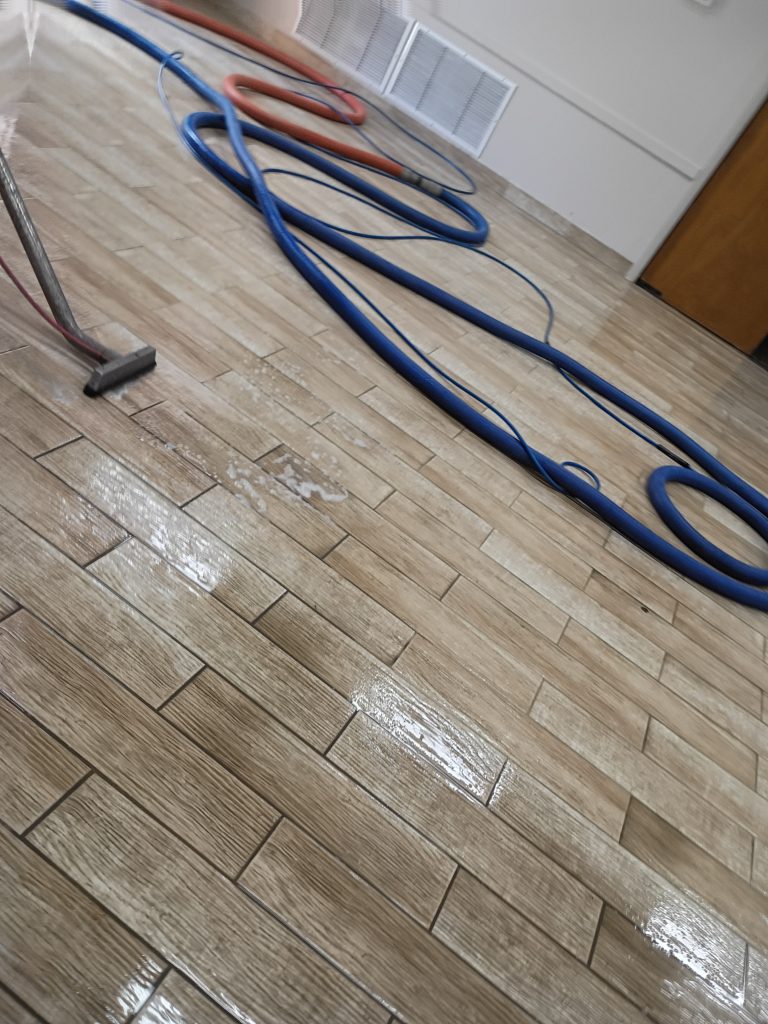
The cleaning process typically uses industrial-grade solutions to break down embedded soils and residues. Then, truck-mounted equipment delivers maximum heat, pressure, and extraction to flush the grout lines and lift contaminants away. Instead of leaving dirty water behind, high-pressure extraction removes it from the surface.
That distinction matters. A floor can look better immediately after mopping because the surface is wet. Once it dries, the grout often returns to the same uneven color. Proper extraction produces a cleaner result because it removes the material causing the discoloration rather than simply covering it temporarily.
Grout Cleaning Is Often the Biggest Visual Change
On many hotel floors, the tile itself is in good condition. The grout is what makes the entire installation appear dirty. Restoring the grout lines can sharpen the appearance of the floor and make tile color look brighter without replacing a single tile.
For grout that is permanently stained, unevenly colored, or difficult to maintain, grout color sealing may be a practical option. A color seal creates a consistent grout color while adding a protective barrier against future staining. It can be especially helpful in lobby restrooms, pool bathrooms, employee areas, kitchen-adjacent spaces, and high-traffic corridors where appearance needs to remain consistent.
Color sealing is not the right answer for every floor. If grout is loose, cracked, or failing, repair should come first. If the property has natural stone, the cleaning and sealing plan must be selected carefully to protect the surface. A good restoration plan solves the actual condition of the floor instead of applying the same process everywhere.
Where Hotels Benefit Most From Tile Restoration
Hotel tile restoration can make a difference throughout the property, but the highest-value areas are usually those guests see often or use in close quarters. Lobbies, entranceways, elevators, hallways, public restrooms, breakfast areas, pool decks, fitness rooms, guest bathrooms, showers, and laundry areas all accumulate different types of buildup.
Guest bathrooms deserve close attention because they combine moisture, soap residue, body oils, and hard-water deposits. Dirty shower grout can make a clean room feel questionable, while stained floor grout can make light-colored tile appear older than it is. Professional shower and bathroom tile cleaning removes buildup from tile surfaces, grout lines, corners, and other areas that are difficult to restore with routine housekeeping products.
Commercial kitchens and breakfast areas bring a different challenge: grease. Even when grease is not obvious, it can settle into grout and textured tile, creating discoloration and making the surface harder to maintain. In these spaces, the right cleaning process supports both appearance and a more sanitary work environment.
Restoration Is Often More Cost-Effective Than Replacement
Replacing tile is disruptive. It can involve removing fixtures, closing guest rooms or common areas, managing noise and dust, coordinating contractors, and paying for new materials as well as labor. If the tile is structurally sound, restoration can provide a substantial visual improvement at a fraction of the cost and downtime.
That does not mean restoration can fix every problem. Cracked tiles, water-damaged substrates, widespread hollow tile, or serious moisture intrusion may require repair or replacement work. But many properties assume their tile has reached the end of its life when the real issue is deeply soiled grout, dull surface film, mineral buildup, or failed sealing.
A professional assessment gives hotel managers a clearer answer. It separates cosmetic issues that can be cleaned and protected from structural concerns that need another type of contractor. That can prevent unnecessary replacement decisions and help the maintenance budget go further.
How to Protect Results After Cleaning
Once tile and grout have been professionally restored, daily maintenance becomes easier, but it still needs the right approach. Harsh or poorly matched chemicals can leave residue, damage sealers, dull certain surfaces, or weaken grout over time. Excess water left on bathroom floors and shower walls can also encourage mineral buildup and mildew staining.
Housekeeping teams get better results when they use neutral or surface-appropriate products, change mop water frequently, and address spills quickly. Entry mats also help reduce the amount of grit and outdoor soil that reaches lobby and hallway tile. In wet areas, consistent drying and ventilation can reduce the buildup that makes grout darken prematurely.
Sealing is another important part of long-term maintenance. A quality grout sealer helps slow absorption, making spills and soils easier to remove. It does not make grout maintenance-free, and it will eventually need to be refreshed, especially in busy commercial areas. Still, it gives hotel staff a more manageable surface and helps protect the restored appearance.
Plan Service Around Your Hotel’s Schedule
For a hotel, timing matters as much as the cleaning method. Common areas may need service during lower-traffic periods, while guest room and bathroom work may need to be scheduled around occupancy and housekeeping turnover. The goal is visible improvement with minimal interruption to staff and guests.
Dream Clean Orlando provides licensed, insured tile and grout cleaning for Central Florida properties using professional equipment, eco-conscious products, and careful attention to the surface being treated. Whether a property needs a lobby refreshed, shower tile deep cleaned, grout color sealed, or high-traffic floors restored, the work should be planned around the hotel’s condition and operating needs.
A clean tile floor should support the guest experience, not become another recurring complaint for the maintenance team. When grout lines are bright, surfaces are free of residue, and wet areas look properly cared for, the property feels more prepared for every check-in.